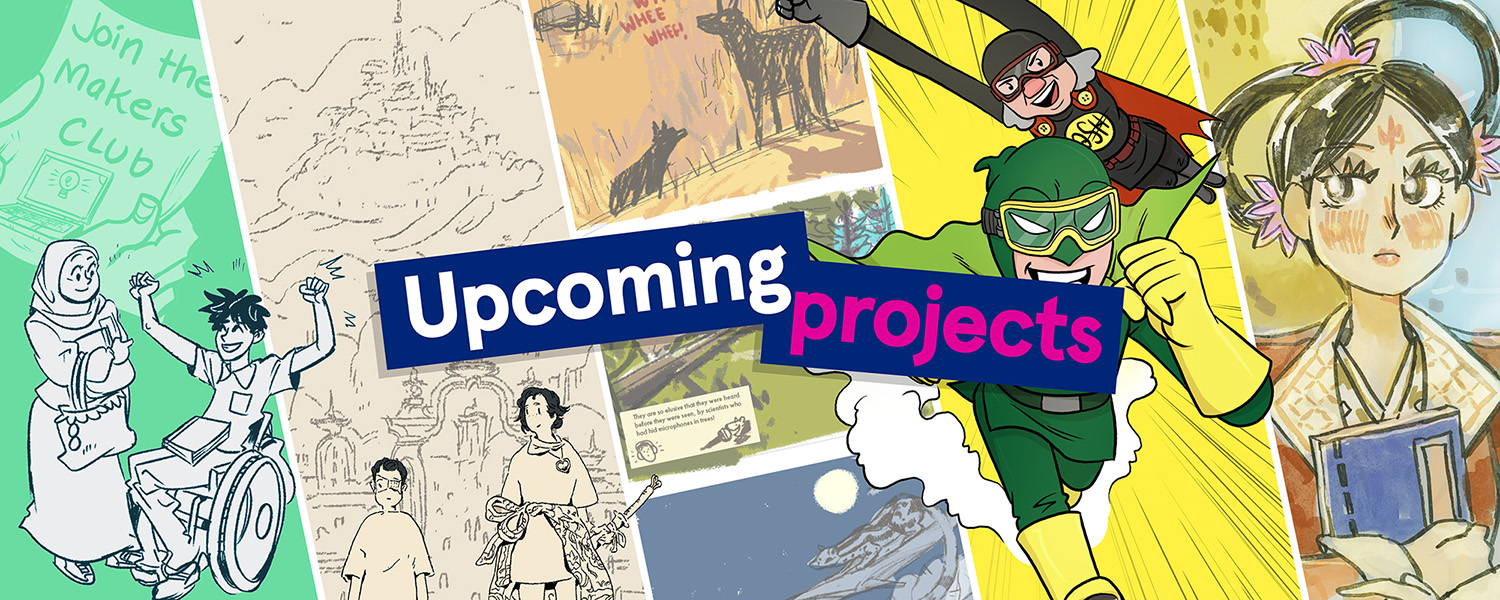
Tales of young entrepreneurs, rarely-heard-of native animals, spirit worlds, and more exciting stories by SEA comic creators feature in Difference Engine’s 2021 publishing line-up

We are proud to announce three original graphic novels that will be published this year, together with brand new projects planned for 2022–2023.

Created by Southeast Asian writers and illustrators, DE’s upcoming line-up features our first picture book-comic, and young adult tale. With our titles covering a diverse range of topics, there will be a book for readers of every age!

Coming Up in 2021
makers-club-starting-up

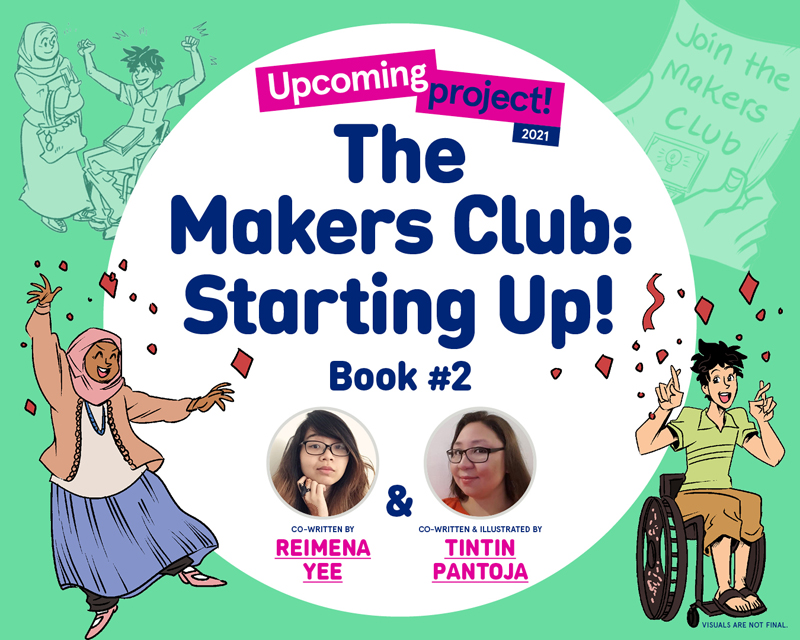
The Makers Club: Starting Up!

Readership: 9-14 years old
Category: Middle Grade Fiction
Publication: June 2021
Synopsis:

Childhood friends Aqilah and Yong Qiang have lost touch over the years. When they are unexpectedly reunited in Pangolin Secondary School, they discover that things are very different, and life seems a lot more uncertain than it once was. Together, will they be able to convince everyone and, more importantly, themselves that they’re ready for independence?

The Makers Club returns in June 2021 with Book #2 of the series. Co-written by Reimena Yee and Tintin Pantoja and illustrated by Tintin Pantoja, The Makers Club: Starting Up! is a comic about friendship, entrepreneurship, and design thinking. Writer Reimena Yee expressed: “I hope readers will enjoy meeting Yong Qiang and Aqilah, and be inspired to pursue their own dreams, whatever they may be.”

Illustrator Tintin Pantoja added: “Creativity takes a lot of work and bravery. This is the reason I love these kids – they very honestly reflect the struggles of people trying to do great things.”

Praise for The Makers Club: Game On! (Book #1)
“I loved it! With a diverse cast of teens with interesting backgrounds, The Makers Club
tackles real problems that young aspiring creators face at home and in school with relatable and believable characters.”
– Laila Shabir, Founder & CEO of Girls Make Games

Book #1 is available in print and ebook format here.


afterlife

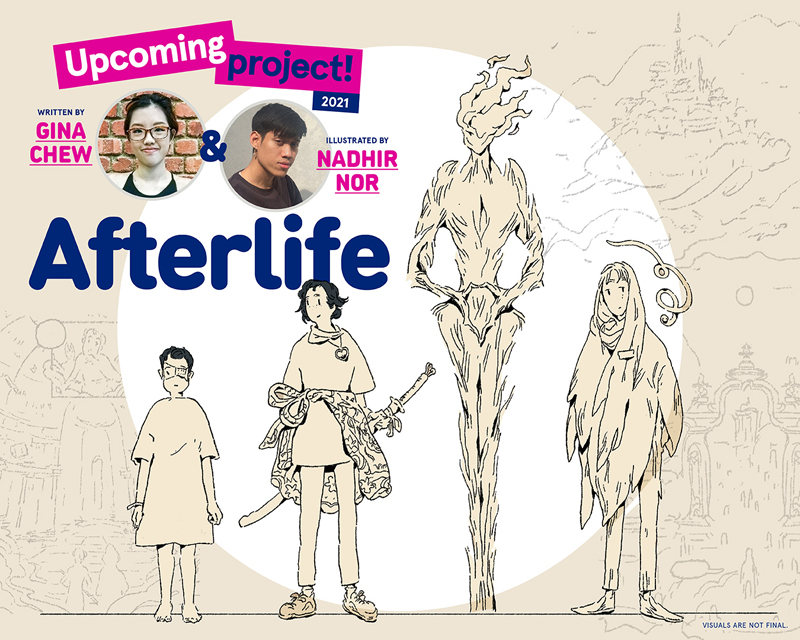
Afterlife

Readership: Young Adult
Category: Fantasy
Publication: August 2021
Synopsis:

Kyra’s younger brother lays on his deathbed and she’s stricken with grief. Spirit Keeper Eric was just there to do his job and bring a Soul into the Afterlife. So why do they feel an inexplicable connection when they meet?

In this great expanse where what’s lost is found, fate, memories, and love intertwine as Kyra and Eric embark on a daring rescue mission to save a little boy from Death’s clutches. Afterlife is an epic Southeast Asian-inspired young adult fantasy graphic novel about one girl’s sacrifice as she fights to save what she loves, without losing herself in the midst of it all…

“I have always been fascinated by stories that compelled its characters to be pushed to the limits,” said first-time comics writer Gina Chew who sought to examine themes of love and sacrifice.

For illustrator Nadhir Nor, the story allowed him to explore his concept of death and the afterlife. “As scary as it can be to consider us having to face death, it’s way more devastating to think of the people we love facing it. The story lets readers ponder that, while having a little bit of fun going through the otherworldly adventures Gina has written.”

**Update 06 July 2021: Due to unforeseen delays, the book will be released in Mar 2022 instead. Stay tuned!


marvellous-mammals

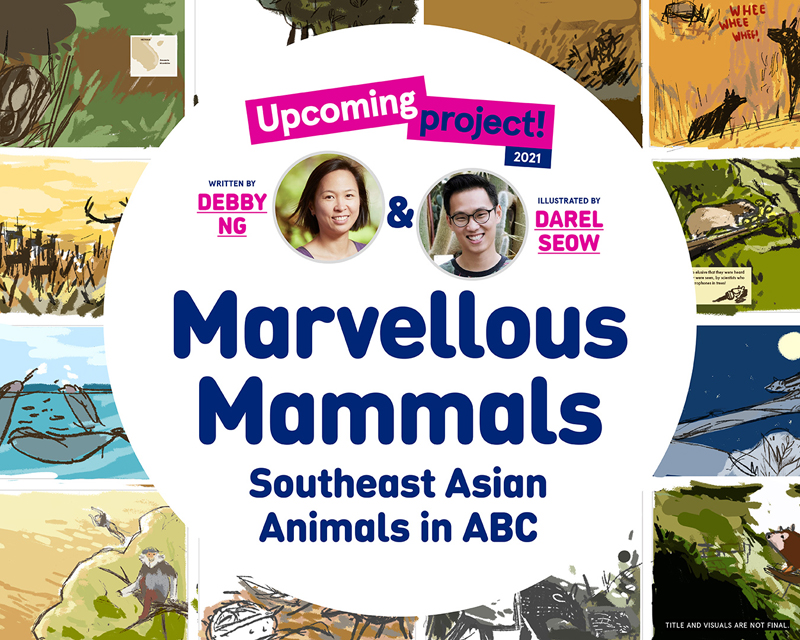
Marvellous Mammals: Southeast Asian Animals in ABC

Readership: 7-12 years old
Category: Picture Book-Comic
Publication: September 2021
Synopsis:

Hello fellow naturalist!

We know that dogs bark, cats meow, and cows moo. But do you know dholes whistle “whee-whee”, wild boars grunt “grrt grrt”, and siamangs call out “ooh-wow-wow”?

In the humid nature reserves of Singapore city, high up the mountain trees of New Guinea, and in the tropical rivers of Ayeryarwady, a multitude of mammals live their unseen lives. They await a bold explorer to learn their secrets. Could that explorer be you?

In this beautiful illustrated comic book for children and adults alike, follow wildlife ecologist Debby Ng and illustrator Darel Seow as they guide you to discover the lesser-known creatures of Southeast Asia!

Writer Debby Ng explained why she’s writing this book: “Six years ago, I became an aunt to a young girl who would grow up with less forests than I had. I wanted her to know that our forests are special and full of incredible wildlife waiting to be discovered. This book is for her, and all the people who live in cities, on the edge of grand forests. May you find a familiar neighbour.”

Illustrator and nature-lover Darel Seow agreed: “I hope this book starts readers on an adventure of learning about and how to live alongside our unique Southeast-Asian wildlife!”


More to look forward to in 2022 & 2023!
work-life-balance

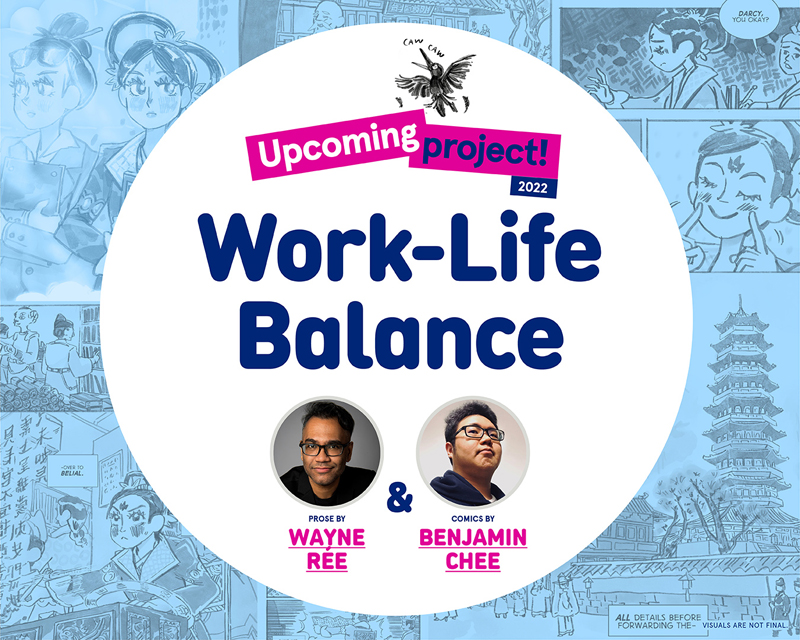
Work-Life Balance

Readership: Adult
Category: Fiction
Publication: 2022
Synopsis:

Dead-end jobs, hellish clients, glass ceilings – it seems like even in the underworld, creatures like the pontianak and the penanggalan aren’t spared from the drudgery of office life. How do the supernatural cope with the super mundane daily grind?

Prose and comics intertwine in this thought-provoking, (forked) tongue-in-cheek collection to bring you familiar Southeast Asian mythology in an even more familiar setting: the realm of the deskbound.

Presenting an entertaining take on corporate inanity and gainful employment, Work-Life Balance features prose written by Wayne Rée and comics illustrated by Benjamin Chee. “With this project, we wanted to explore what it feels like to work in the corporate world, how much the supernatural is a part of Southeast Asian culture, and just this sense of duality that I think we all struggle with on some level,” said Wayne Rée.

Added illustrator Benjamin Chee: “What it’ll have and what I’m excited to draw: What if your colleague is a literal monster? Boardroom drama…with demons? Terrible, terrible stuff!”


amazing-ash-superhero-ahma

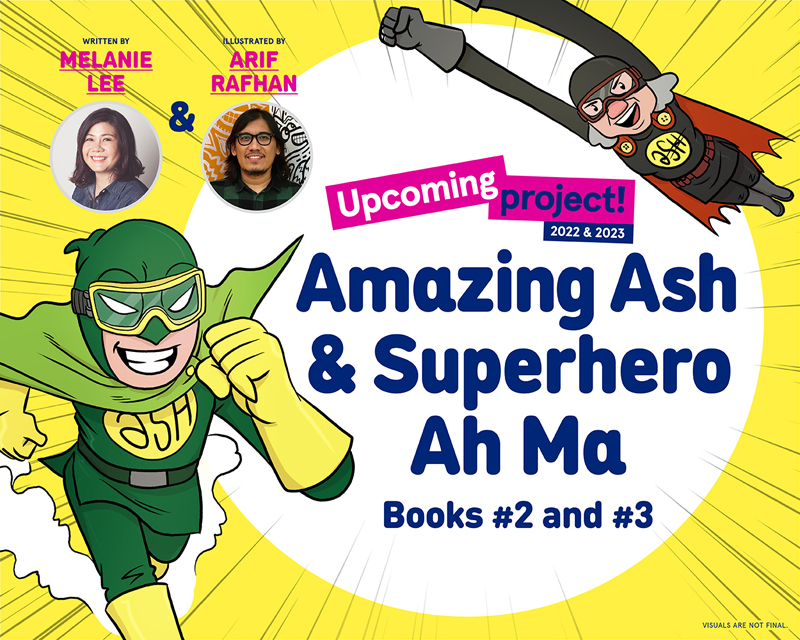
Amazing Ash & Superhero Ah Ma (Books #2 and #3)

Readership: 7-12 years old
Category: Middle Grade Fiction
Publication: 2022 & 2023
Synopsis:

The adventures of Amazing Ash & Superhero Ah Ma continue! As Ash juggles school and being a superhero, and Ah Ma seems to get increasingly more forgetful, how will Team ASH cope with new nemeses and strange developments happening in town? Join Ash, Ah Ma, and the rest of Team ASH as they try to save the neighbourhood and at the same time, face the changes that come with growing up and growing old.

The creative team of writer Melanie Lee and illustrator Arif Rafhan have signed on for a second and third installation of Amazing Ash & Superhero Ah Ma. “There are going to be even more thrills and spills with new challenges, along with plenty of heart in the relationships. We hope to balance the reality of Ah Ma’s dementia with the hopefulness of unconditional family love and community support in the next two books,” said the creators.

Praise for Amazing Ash & Superhero Ah Ma (Book #1)
“The storyline is unique and captured my attention as a reader. I like that it portrays persons with dementia (PWD) in a positive light and seeing them as more than just PWD.”
– Tan Pei Qi, Adila Yusof and Nicodemus Ching, Social Workers of AWWA Health and Senior Care

Book #1 is available in print and ebook format here.


Creators’ Bios

Reimena Yee is an illustrator, writer, and designer hailing from the dusty metropolis of Kuala Lumpur. She is the author-illustrator of the gothic comic The World in Deeper Inspection, the Eisner and McDuffie-nominated The Carpet Merchant of Konstantiniyya, and Séance Tea Party.

Tintin Pantoja is a Philippine-born artist who graduated with a BFA in Cartooning and Illustration from the School of Visual Arts in NYC. She has been illustrating comics since 2007. Among her works are adaptations of Hamlet, Pride and Prejudice, and the educational middle-grade Manga Math series.

Gina Chew is a Singaporean writer most acclaimed for her debut play Permanence. An English Literature graduate from the National University of Singapore, she brings her interest in theatre and its myriad of stories-come-to-life to other mediums including film, television and online media such as videos and animated stories.

Nadhir Nor is a Malaysian artist based in Selangor with an interest in all things otherworldly. Believing the magic of finding the otherworldly in the mundane, and vice versa, makes for a story worth telling, he uses his works to explore the relationships between mythology and ancient cultures with modern society.

Debby Ng is a wildlife disease ecologist, photojournalist, and National Geographic Explorer. She is also the founder of two volunteer organisations: PulauHantu.sg, which aims to conserve Singapore’s coral reefs, and HimalayanMuttProject.org, which focuses on emerging infectious diseases capacity-building in Himalayan communities. She is currently pursuing her PhD at the NUS Centre for Nature-based Climate Solutions.

Darel Seow is a visual storyteller who illustrates the tales of the natural world through his unique brand of wry wit and whimsy. An illustration graduate from Central Saint Martins College of Art and Design (UK), he believes in the draw of storytelling as a means of engagement, creating experiences that simultaneously excite and educate. He has previously worked with the National Museum of Singapore, the Asian Civilisation Museum, and the British Museum.

Wayne Rée is the author of the short story collection, Tales From a Tiny Room. He’s contributed to publications such as Infinite Worlds Magazine, LONTAR, and Pulp Toast. He’s also the co-creator of the comic, Mr Memphis, and the narrative podcast, Ghost Maps.

Benjamin Chee is a game artist by day, and a comic creator by night. He is the creator of Charsiew Space, a story about smugglers in spaceships cooking forbidden pork. He has also published 6 other titles, and has contributed to multiple anthologies including LONTAR Issue #5, Liquid City Vol. 3, Asian Monsters, and SOUND: A Comics Anthology. 

Melanie Lee is the author of the picture book series The Adventures of Squirky the Alien, which picked up the Crystal Kite Award (Middle East/India/Asia division) in 2016. She is also an Associate Faculty at the Singapore University of Social Sciences developing and teaching media writing courses.

Arif Rafhan is a comic and pre-production artist. His work has been published in more than 10 books to date by MPH, Buku Fixi, Maple Comics, and Marshall Cavendish. He also works with various production companies creating pre-production visuals such as concept art, character designs, environment designs, and storyboards.


**Titles and illustrations are not final.

For updates on these titles and more, sign up for our e-newsletter.

If you have a story you’d like to tell, head here to find out more details on submitting your pitch or manuscript to us. We’d love to hear from you!

 

Launching a Virtual Event with Creatives 

Before 2019, the Difference Engine team had no inkling that virtual book launches would become so popular. Fast forward to 2020, with three successful online book launches and events later, we are here to spill the tea on how you can host your own successful virtual event too.

The COVID-19 pandemic has changed the way many companies do their businesses, and the book industry is not spared. Singapore began its circuit breaker measures on 7 April 2020, which meant that our team had to rack our brains to launch the first title in our line up, The Makers Club: Game On! 

Written by Reimena Yee and illustrated by Tintin Pantoja, The Makers Club: Game On! is the first book in a new graphic novel series that aims to inspire kids to explore STEAM topics and maker culture. 

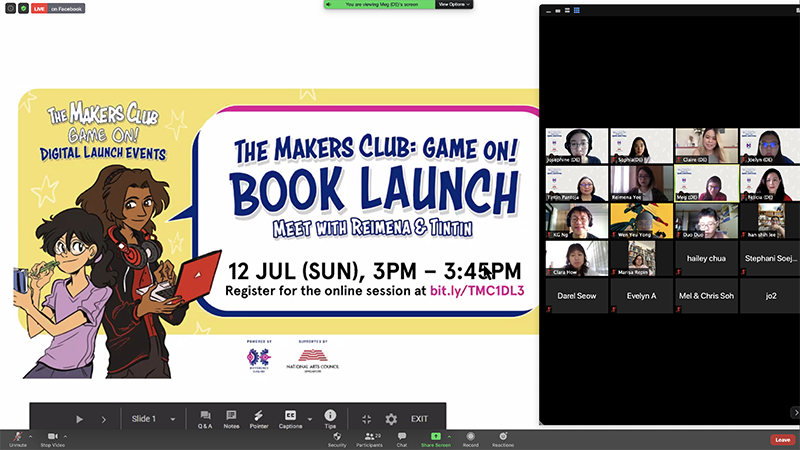
We decided to launch a series of free digital talks and workshops that ran from June till September 2020 – with the support of the Digital Presentation Grant from the National Arts Council – to generate interest not only in the book, but also maker culture and comics as a medium. The creators of the graphic novel, Reimena Yee and Tintin Pantoja, led the talks and workshops alongside other creators and experts.

It was the first time any of us had organised a virtual event and we were apprehensive at first. But after a few sessions, we started to get the hang of it. We’ve decided to share our experience with you and we hope you’ll be able to pick up some useful tips from our experience to create your own virtual book event! 


The-Makers-Club-Launch

The digital launch of The Makers Club: Game On!


  1. Decide on and adapt to the tech you need

There are many different video conferencing platforms these days, but we decided to go with Zoom due to its increasing popularity and audience’s familiarity with the platform, along with Facebook Live. Since we were new to Zoom, the team spent a few sessions testing out the features, even holding fun internal presentations like “18th Century Beachwear” and inviting fellow colleagues from our sister company to sit in. 

Besides getting familiar with the tech, we also needed to create a smooth, welcoming experience for all participants. This included anticipating necessary house rules, as well as digital settings. Some questions we needed to answer included: 

  1. Should participants be muted when they first enter?
  2. Should we allow everyone to chat with each other privately?
  3. How do we ensure the event is secure and keep unwelcome “Zoom bombers” out? 
  4. How do we encourage people to turn on their videos so that the atmosphere is more welcoming? 


Darel Seow Debby Ng-large

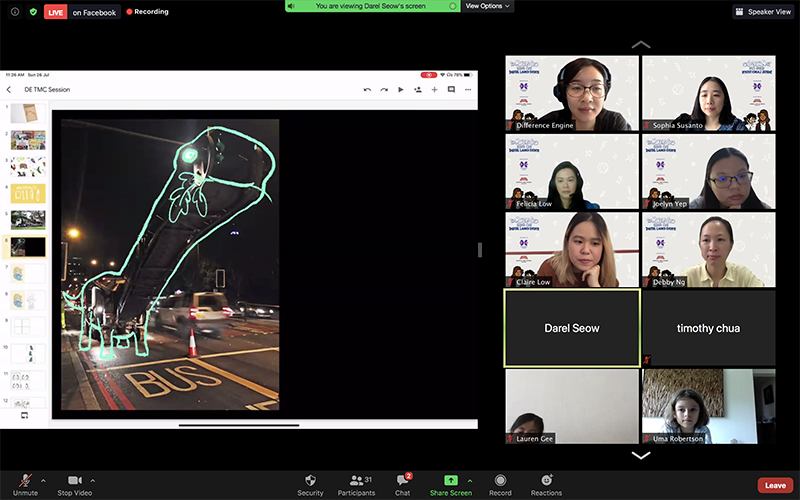
The screen-sharing options on Zoom allowed Darel to share his drawing process in real time. 


  1. Promote the event 

Once that was done, we set up the Zoom invite and Facebook event page, promoted it on social media, and reached out to guests who would be interested. A reminder email was also scheduled to be sent one day before the event. Our creatives also participated in the promotions either by sharing the event on their social media or doing up collaterals! 


  1. Plan the talk and workshop content  

One of the most fun parts of planning the virtual events was working together with the creators and coming up with the talk content and activities to engage participants. This could be in the form of reading, activity, and Q&A session. In one of our events, “Let’s Frame it Another Way!”, illustrator Tintin Pantoja decided to show a live demo of how to translate a comics script into visuals! You can view the recording of the live event at this link

Other materials to prepare might include creating slideshows and any worksheets or additional materials, if any, which can be downloaded and printed before the event. For example, we created a few blank comics templates that participants can download and use to create their own stories here


Vann Law-large

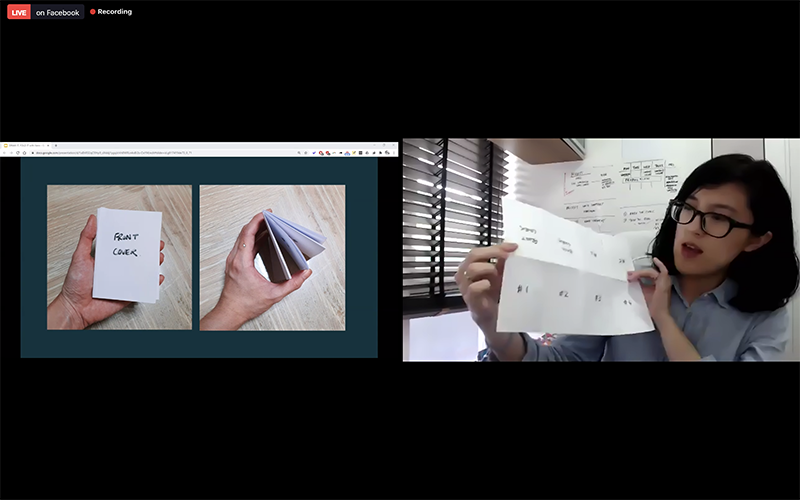
Illustrator and animator Vann Law planned a fun activity for participants to create their own zines. 


  1. Set up the virtual space 

Before the event, we had a rehearsal session to ensure that speakers were familiar with the technology, such as sharing their slides, and playing media online. It’s important to iron out any kinks prior to the event to reduce hiccups that could make the audience drop out, to reinforce a professional image, and to encourage a pleasant experience so that participants will return to your next event! The DE team also split up tasks such as moderating, troubleshooting, timekeeping, and more, that were communicated through a separate WhatsApp group chat. 

Friendly tip: Remind anyone sharing their screens to quit any chat applications that might have notifications popping up that the audience will see! 

To ensure that instructions and live demonstrations are clear, one suggestion is to use two different devices (if possible!) to present – one can be used to stream the live drawing, while the other device can be used for presenting the slides or capturing the speaker. During “Comics for Climate Change”, ecologist Debby Ng and illustrator Darel Ng conducted their session by sharing slides and conducting a live demonstration with an external tablet. You can view the recording of the session here. 

It’s vital to set up the physical space beforehand too, so that the speakers are in a quiet environment and can be heard! Speakers should also be mindful of what is in the background in their screen – we like to suggest a clean background, or if you are so inclined, to show off your bookshelves! Another great option is using a virtual background. However, if creatives are demonstrating anything on screen, remember that you might need to turn off the virtual background, to prevent interference, or even worse, completely obscuring their demonstrations. Illustrator and animator Vann Law did just that as she taught participants how to create and fold a zine out of a sheet of paper at her zine-making workshop here


  1. Have fun and enjoy the session! 

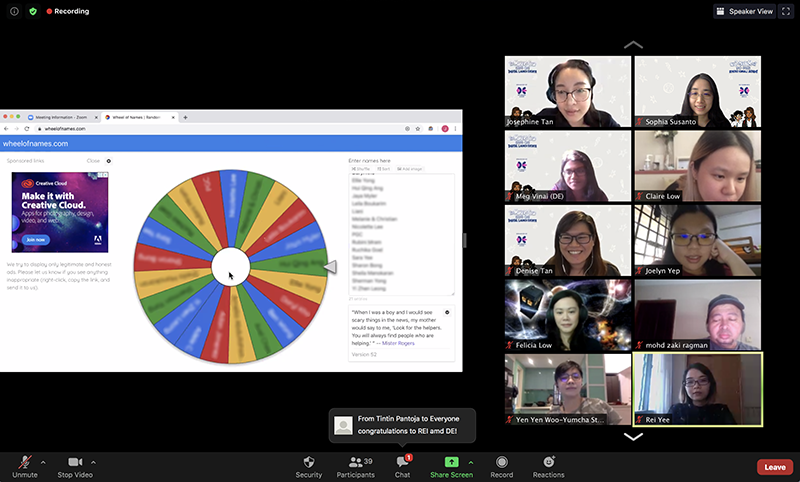
Virtual events may be a whole different ball game from in-person events, but they offer the opportunity to interact with the audience in a different way. Free online tools such as Wheel of Names can provide some fun and the interactive tools on Zoom can provide the opportunity for more people to ask questions! 

You can also get creative with activities or games you want to introduce to your audience, such as co-drawing platforms, or cooperative sharing apps like a virtual whiteboard such as Miro

Wheel of Names-large

Websites like Wheel of Names can add a fun touch to your event. 

What are some ways you can think of that can excite audiences in a virtual event? We look forward to hearing your thoughts on our social media platforms! 

The Makers Club: Game On! features a group of fun and diverse characters who embark on creative journeys to experiment, code, and develop a maker mindset. 

The graphic novel is available in print and ebook formats. 


Why Adults Should Read Comic Books Too

While comics play a great role in getting younger students to develop reading habits – both by meeting individual reading needs and to help form a love for reading – we are finally moving past the misconception that the medium is just for kids. Comics are for all ages, whether you are new to the medium or have loved it for years. Here’s why.


Comics are fun to read

Maybe the best thing about comics is that almost any topic can be found in a comic book – nothing is too far-fetched as a subject matter! Aliens, man-eating slugs, vampires, ghosts, post-apocalyptic nightmare realms…the list goes on. Comics explore topics that stretch far and wide, and are a medium where imagination runs wild, and not just in terms of the story, but the art as well. 

Other times, certain subject matters need to be made riveting. Comics can be used as learning tools across a wide range of subjects, such as languages, science, and even mathematics. Oftentimes, when it’s in a comic, it is easier to digest.


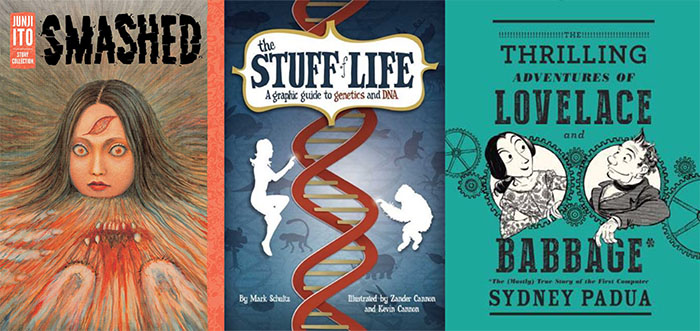
Smashed: Junji Ito Story Collection entwines scary and strange in a collection of horror manga. The Stuff of Life: A Graphic Guide to Genetics and DNA is a nonfiction science comics for adults, while The Thrilling Adventures of Lovelace and Babbage: The (Mostly) True Story of the First Computer is inspired by the lives of Ada Lovelace and Charles Babbage.


Comics were first intended for adult readers

While young readers are naturally drawn to comics (think comics series like The Adventures of Tintin and Mr Kiasu), comics can be used to tell stories of any content, in any style, and for any audience. Japanese, European and American comics each evolved differently, but generally speaking, comics were used to depict cultural and historical events, satirical or otherwise. Even today, with many child-friendly comics targeted at very specific age groups and market segments, more than half of comic book readers are still adults. So it is entirely possible for the children and adults to be visiting a comics shop together, each absorbed by the variety of content on offer in separate corners of the same shop.


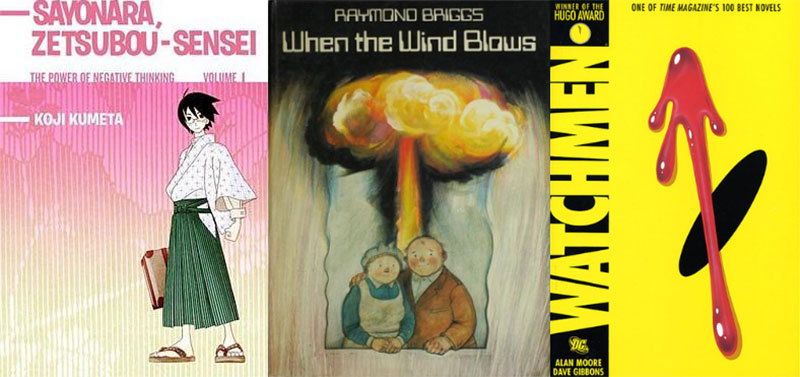
Sayonara, Zetsubou-Sensei, When the Wind Blows and Watchmen

Sayonara, Zetsubou-Sensei, When the Wind Blows and Watchmen are satirical works that encapsulate feelings on war, politics, and life.


Comics provoke deep-thinking

Comics make readers engage on a plane that extends beyond words on a page. The process is active: Text and images come together, but the reader makes meaning out of the combination, filling in the gap between panels, gutters and speech bubbles. When we read comics, we’re not only looking at the text but also at the spatial cues, the colours, the visual cues between objects, and all the other elements in the panel. When all of these elements are combined, they can invoke the sense of passage of time, the space of the story, sounds, and action. As the reader’s inference skills and visual literacy improves, comics also pave the way for a deeper understanding of metaphors, symbolisms, and point-of-views.


Furthermore, creators can pack a lot of tiny details into one single panel or page just by how they portray their work. Even a character’s personality traits can be shown in a panel by highlighting an object. For example, a character’s love for a certain movie franchise can be shown entirely through background illustrations; maybe there are movie posters in the room, or memorabilia peeking through their bag. There are so many visual cues that artists use to convey plenty of information – all in just a few panels.


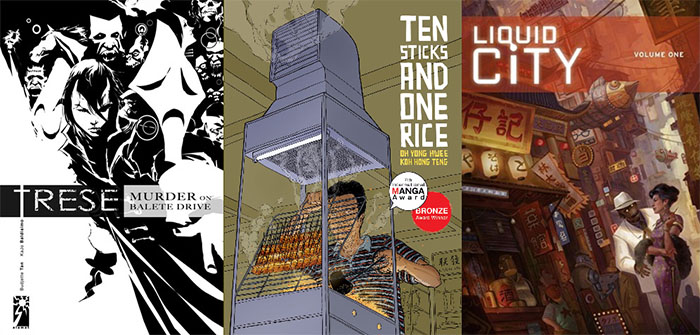
trese-ten-sticks-liquid-city

Trese, Ten Sticks and One Rice, and Liquid City are beautifully crafted graphic novels that encapsulate characters’ emotions and settings.


Comics are used to discuss heavy topics

Oftentimes, narratives in comics also mirror real-world events. X-Men, for example, reflected racial tensions, and Captain America was created during World War II to serve as motivation and inspiration for troops. Similarly, a lot of stories in comics, even now, mirror our ever-changing world and current social issues, offering intellectually stimulating, empowering stories. There are also comics that deal with topics like grief, growing up, and other hardships of life – and sometimes, these heavy topics can be expressed more poignantly in this widely-accessible medium.


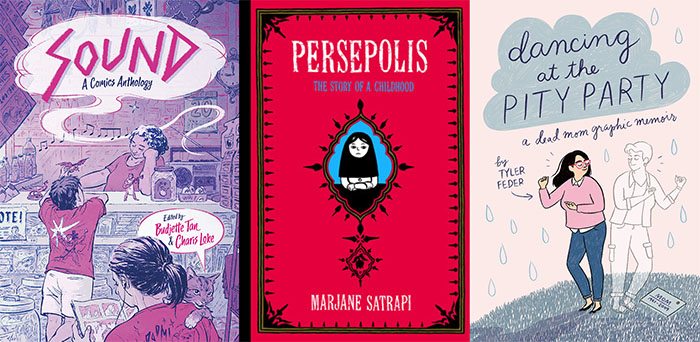
Sound-Persepolis-Dancing-at-the-pity-party

SOUND: A Comics Anthology, Persepolis, and Dancing at the Pity Party are graphic novels that poignantly discuss topics that can be difficult to breach.


Comics transcend language and cultural barriers

Ever wondered how the instructions in an IKEA manual can guide anyone, anywhere? As visual learners, in contrast to prose, pictures can help a wide range of people with understanding, which can go on and on for pages…this is something that could just be displayed in a couple of panels!

Often in prose, a reader can also lose concentration when there are unknown words. Yet, comics don’t generally have this problem. The story can still be followed by its art and other elements. In fact, comics are a good resource to learn more vocabulary – this could especially help those learning a new language.

More than just expanding one’s vocabulary within the English language, the visual accompaniment inherent to comics allows readers to follow the story even if they aren’t speakers of the language the comic is printed in! Manga is a great example of this – known as a representation of Japanese culture and history, manga started gaining traction with a new generation of non-Japanese people around the world who were interested in learning the country’s culture and language. Today, manga has become synonymous with Japanese popular culture, and is enjoyed worldwide by readers of all ages.

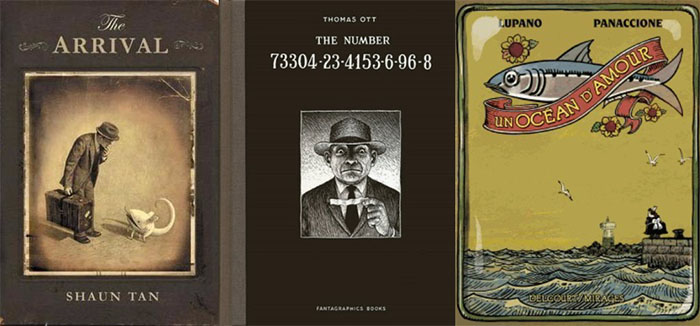
arrival-number-unocean

The Arrival, The Number 73304-23-4153-6-96-8, and Un océan d’amour are examples of graphic novels that do not feature any dialogue, yet tell compelling stories through visuals and other elements.


Comics is a unique medium that encourages reader participation, and when immersed in a comic, you are in charge of your (reading) journey. What are you waiting for? Once you set foot in this vast, inviting realm, to quote the magical words of Dr Suess, “Oh, the Places You’ll Go!”


Psst! Remember to check out all the books mentioned in this post! DE recommends them to ages 18+.

Flashback: Amazing Ash & Superhero Ah Ma Book Launch

Missed out on the super-fun during our Amazing Ash & Superhero Ah Ma book launch event? Needed to save the day from some pressing ah-ma-gency?

Don’t worry – in this recap, we will revisit the session’s most ash-citing moments. We will even show you how to inspire children to come up with their own superhero identities as well!

For those who are not familiar with Amazing Ash & Superhero Ah Ma, it is an intergenerational family-friendly superhero graphic novel that follows Ash and her grandmother as they navigate superpowers and dementia. 

Follow this ensemble of strong, self-starting women – of all ages! – as they use teamwork to reconcile everyday problems with their newfound superhero identities. Filled with a mix of action-packed and emotionally-charged moments, this heartwarming story encourages children to explore the challenges of growing up and ageing in an empathic yet fun manner. 

Click here to buy the book and find out more! (For the ambivalent, why not click on this ash-tonishing excerpt before you decide?)

For those who want to experience the book launch in its entirety, a video recording is available on our Facebook page. Otherwise, keep on reading to see the workshop’s highlights – up, up, and away we go!

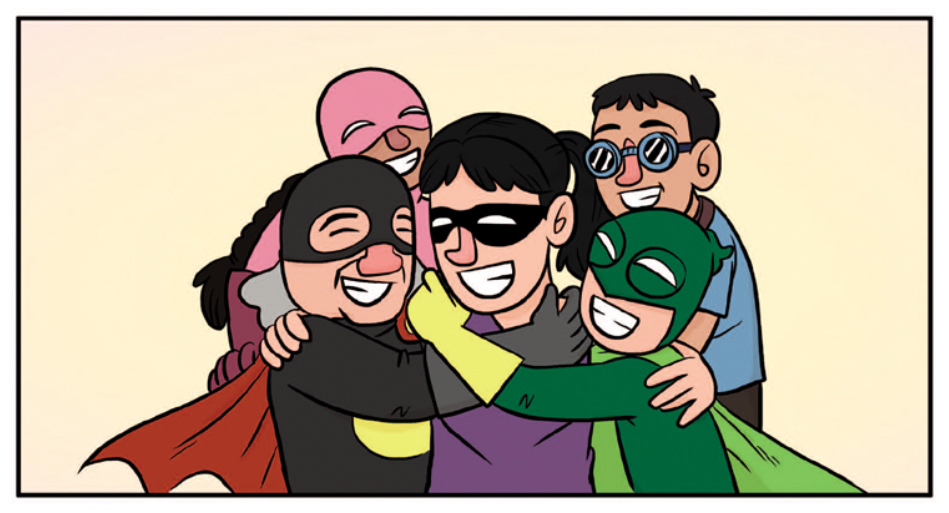
ASH_Ah_Ma_Group_Hug

Guest speaker Ivan Loh from Lien Foundation inaugurated the launch with an insightful talk on what dementia is, and how children can play a part in helping family members who suffer from it.

In his speech, Ivan touches on how the rising incidence of dementia is an issue of pressing concern not just in Singapore, but in many other developed nations with rapidly aging populations as well. Because of this aforementioned trend, it is imperative that younger generations, especially children, are exposed to the concept of ageing and its difficulties. In turn, this awareness can help remove existing stigma associated with age-related degenerative conditions, and can reduce the disconnect between younger and older generations.

There are many ways in which children can play a role in the lives of family members who are experiencing dementia. By involving them in the lives of their seniors, not only will children gain first-hand experience on how dementia affects their loved ones, these interactions have also shown to be helpful in impeding the acceleration of the illness.

To summarise the key points of the talk:

  • Encourage children to spend more time socialising with their grandparents – even if they are suffering from dementia. The key point here is to reaffirm that their family members are still the same people who love them!
  • Be patient when interacting with seniors who have dementia, even if it means repeating oneself or talking slower and louder. Conversations help keep these seniors included and engaged with the rest of the family, and provide a respite from boredom and isolation.
  • Non-traditional mediums, such as graphic novels, are great for learning about ageing and dementia. The accompanying illustrations make the topics more accessible and interesting, and can motivate children to learn more about the subject beyond the given material.

After getting an introduction to one of the core concepts of Amazing Ash & Superhero Ah Ma, creators Melanie Lee and Arif Rafhan shared some behind-the-scenes tidbits from when they were working on the book:

Melanie opened by mentioning how strong female leads like Sophie from Howl’s Moving Castle and the no-nonsense landlady from Kung Fu Hustle inspired her to create an eldery female superhero character.

Putting the idea onto paper wasn’t an easy process – it ended up taking Melanie and Arif nearly two years to finish Amazing Ash & Superhero Ah Ma!

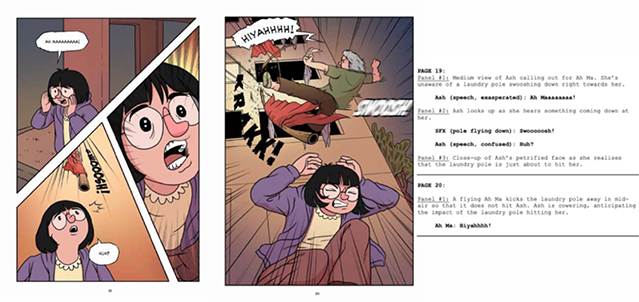
ASH_Script_Behind_the_Scenes

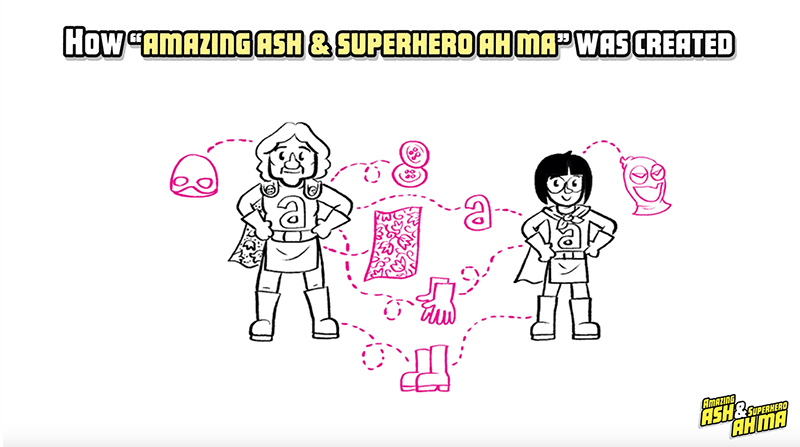
To highlight that Ash and Ah Ma are homegrown, self-funded superheroes – you don’t need to be a genius billionaire to become a successful superhero! – from Southeast Asia, Arif incorporated these influences into Ash’s and Ah Ma’s designs. 

From button-on capes to rubber gloves and footwear, we hope that Ash and Ah Ma’s ingenuity in improvising their superhero outfits will inspire children to be equally creative in their projects!

ASH_Char_Creation

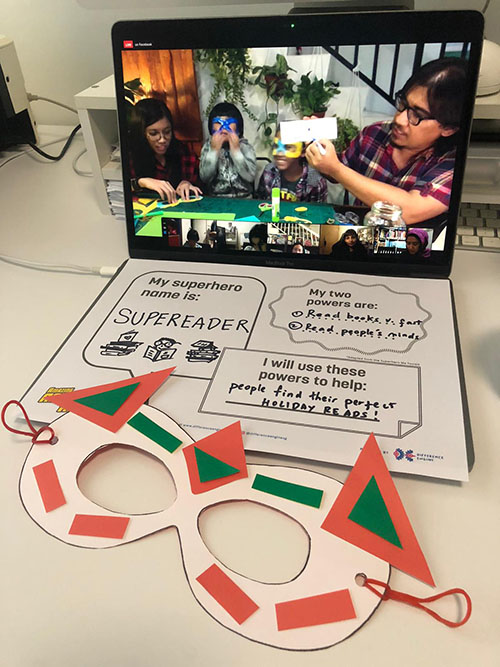
After the participants were introduced to how easy it is to make up a superhero persona and a corresponding costume, Melanie and Arif proceeded to the main activity of the event: Superhero Workshop!

To help the participants conceptualise what kind of superheroes they want to be, we created the following set of worksheets to get them thinking about not just fictional superheroes, but also real-life heroes they look up to. Do they want to have the strength and confidence of Wonder Woman? Or would they prefer to have the (seemingly!) otherworldly organisation skills of their parents instead? The sky’s the limit! 

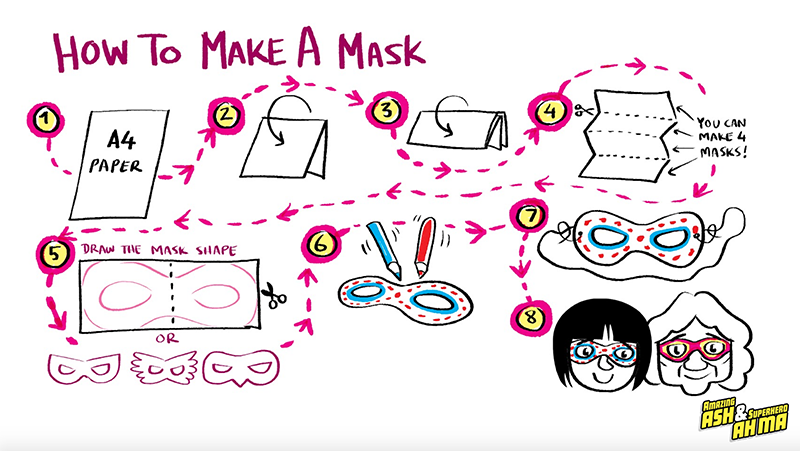
After everyone had decided on their superhero personas, the Arif took over to explain how to make and decorate a personalised superhero mask.

Participants could then choose from one of the two methods to obtain a mask template:

1. (For those with a printer) Via our premade template

2. Or by following Arif’s freehand method.

 ASH_Mask_DIY_Instructions

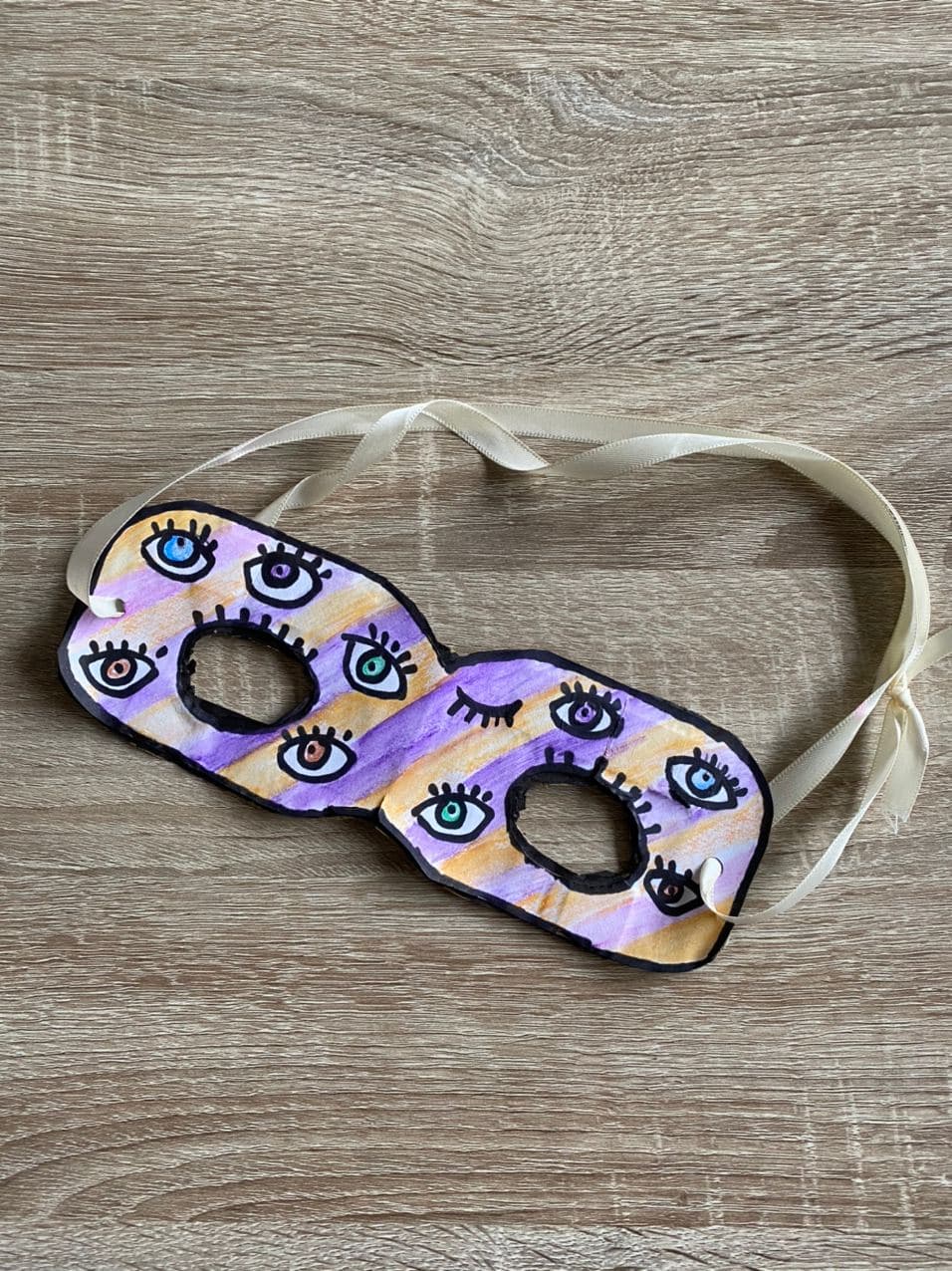
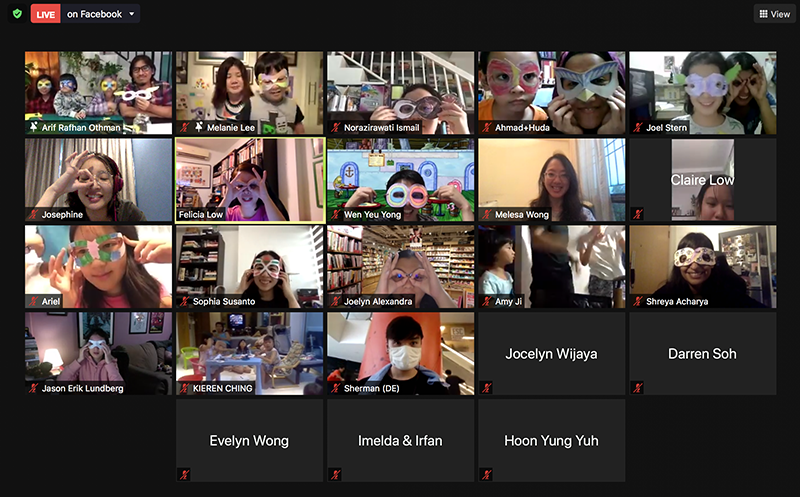
A flurry of paper, colouring materials, and supervised scissors-use later, we were now a group of superheroes!  

Here are some examples that our superheroes-in-training created during the workshop:

 ASH_Shreya_Mask

ASH_Sophia_Mask

If you want to participate in our superhero workshop at your own time, don’t forget to tag us with a photo of yourself – in your mask! – using the hashtag #AmazingAshandSuperheroAhMa on Facebook and Instagram, or email us at readcomics@differenceengine.sg. The world could always use more heroes! 

To get more insight on the life of superheroes, follow the adventures of Ash and Ah Ma by getting a (print or ebook) copy of the book today! 

We hope everyone had fun – we sure did! – and we look forward to seeing everyone again at our future events. Stay super!

ASH-group-shot


To find out more about Amazing Ash & Superhero Ah Ma, head here!

How Comics Help Students Learn Better

Educators, researchers and comic artists have been advocating the use of comics to teach for a good while now. But why exactly is this the case? More than just fun and laughter, comics do have a place in classrooms and other learning environments. Here are the reasons.

Comics are appealing and easy to remember

Comics is a medium that combines words and visuals in a way that optimises the strengths of each. Words can be sparingly used to communicate the key points, while the visuals can deliver a lot of context at a glance. Together, they hold more appeal than plain text, are easier to recall and to store in long-term memory.

No wonder comics are often used for explainers, from flight safety instructions to public behaviour advice, from science comics for children to inspirational stories about maker culture. Artists often choose to add visual cuteness and humour or explain the concepts through fiction. Both are good ways to add a fun spin without compromising on clarity. Comics of this type make for great supplementary reading for students outside schools.

secret-coders-science-comics-cells

Secret Coders, Science Comics: The Brain, Cells at Work! all entertain while they educate.


Comics encourage interpretative thinking

The language of comics is so unique that reading them engages the brain in the same way that an advanced language would! Nuances can be expressed simply by contrasting what characters say with the expressions they wear which may hint at an opposite meaning. Much like in real life, readers can only pick up on these by observing closely. 

Each comics culture also develops its own additional visual cues too. Japanese manga readers understand instinctively that a character with sweat drops, furrowed brows and with cross-shaped popping veins are irritated and dismayed. The same way that European bande dessinée readers understand that a character with sweat drops and floating bowler hat on top is panicked and confused.

Comics attune readers to the many ways words and visuals can be combined and interpreted differently. As readers put together clues to understand the narrative, it gives their brain a good workout by triggering complex brain processes.

aquicorn-cove-explorers-makers-club

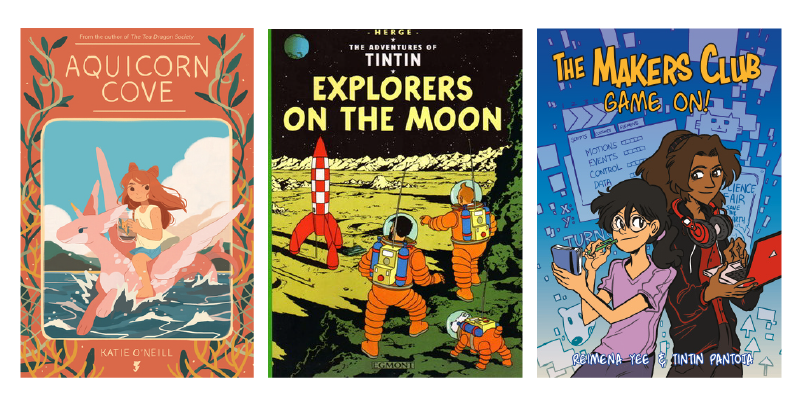
Aquicorn Cove, Tintin: Explorers on the Moon, The Makers Club: Game On!  each come from a different comics culture and explore distinct themes of environmentalism, space travel and maker culture.


Comics stimulate emotions and empathy

Comics as a medium has come a long way from newspaper funnies and has grown into a sophisticated mode of storytelling. Plenty of comics today deal with real world situations, whether through a fictional story or a personal account framed as a memoir. When human figures are simplified as line drawings, readers are more likely to identify with the people in comic books and develop empathy. This is doubly effective when the issues are framed by narrative. Powerful images form strong impressions on students and help them remember and retain the information better.

Comics also have a great capacity to make dark and difficult subjects easier to digest yet leave it open to the readers to decide how deeply to engage with it. Some may choose to read a comic book just for the plot in two hours flat, focusing on the emotional arc of the story and getting only a brief exposure to the themes and issues. Others may have their curiosity piqued and scour the same book for more contextual information. They will gain further understanding of the time, place, culture that the stories or personal accounts are set in.

anne-frank-they-called-us-enemy-illegal-

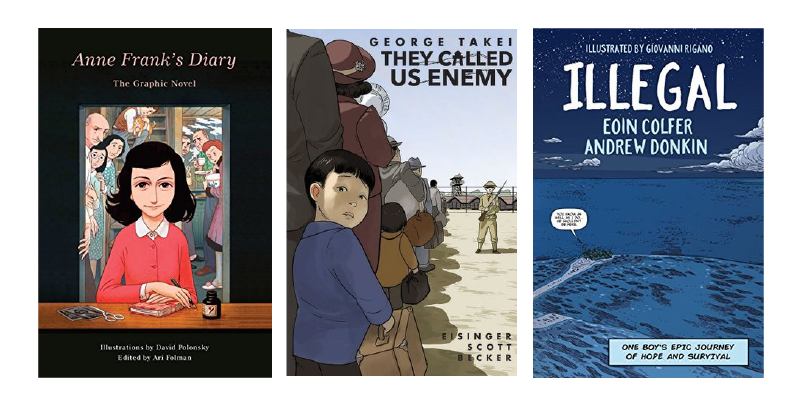
Anne Frank’s Diary: The Graphic Novel, They Called Us Enemy, Illegal are graphic novels that deal with themes of discrimination, war, refugee and migration, all told from the eyes of children.


Comics encourage readers to make meaning for themselves

Ultimately, comics is such a versatile medium that involves their readers intensely in the process of meaning-making. We live in the Internet Age where we are constantly bombarded with images and unfiltered messages. Visual and media literacy is an increasingly important skill, even for children at a young age.

In April 2020, an American non-profit organisation of comics creators called Comic Book Legal Defense Fund set up a League of Graphic Novel Educators. It brings together people around the world who stand by the power of graphic storytelling, furthering the message that students can benefit from reading comics — and educators can benefit too from using them to teach.

nameless-city-compass-south-amulet

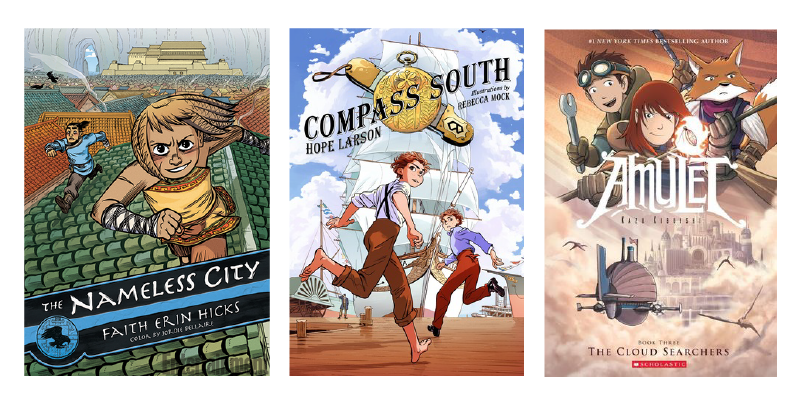
Check out the vibrant covers of The Nameless City, Compass South, Amulet: The Cloud Searchers. What kinds of adventures will readers experience?


Psst! Remember to check out all the books mentioned in this post! DE recommends them to children aged 7-15. For specific recommendations on how to use comics in classrooms, the Comic Book Legal Defense Fund website offers lists and resources.