[PRESS RELEASE] Difference Engine Unveils 2024 Catalogue

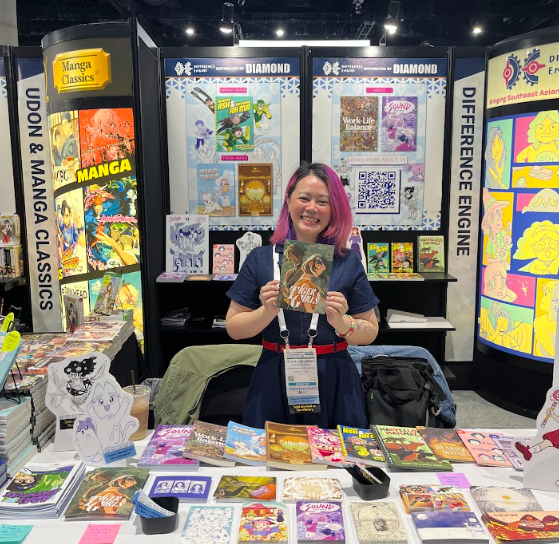
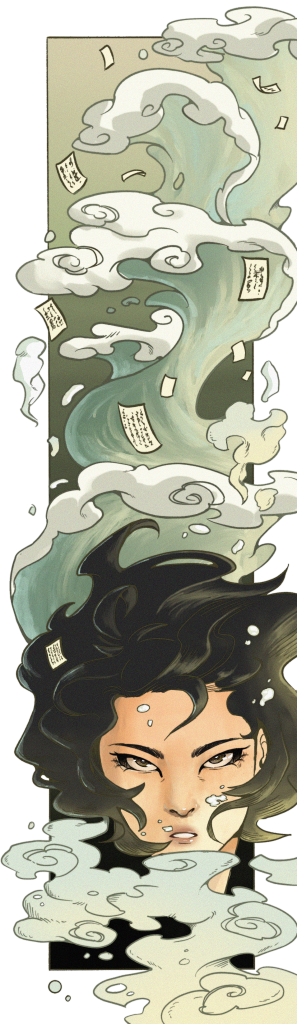
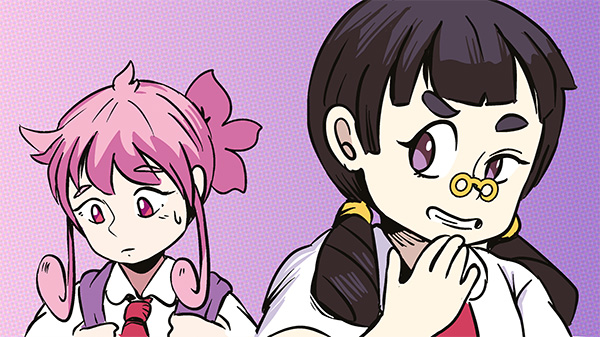
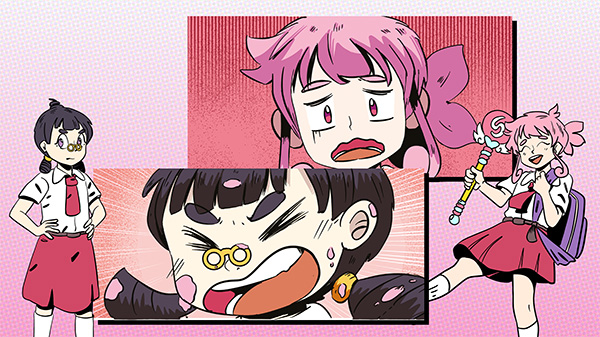
Illustration for Tiger Girls

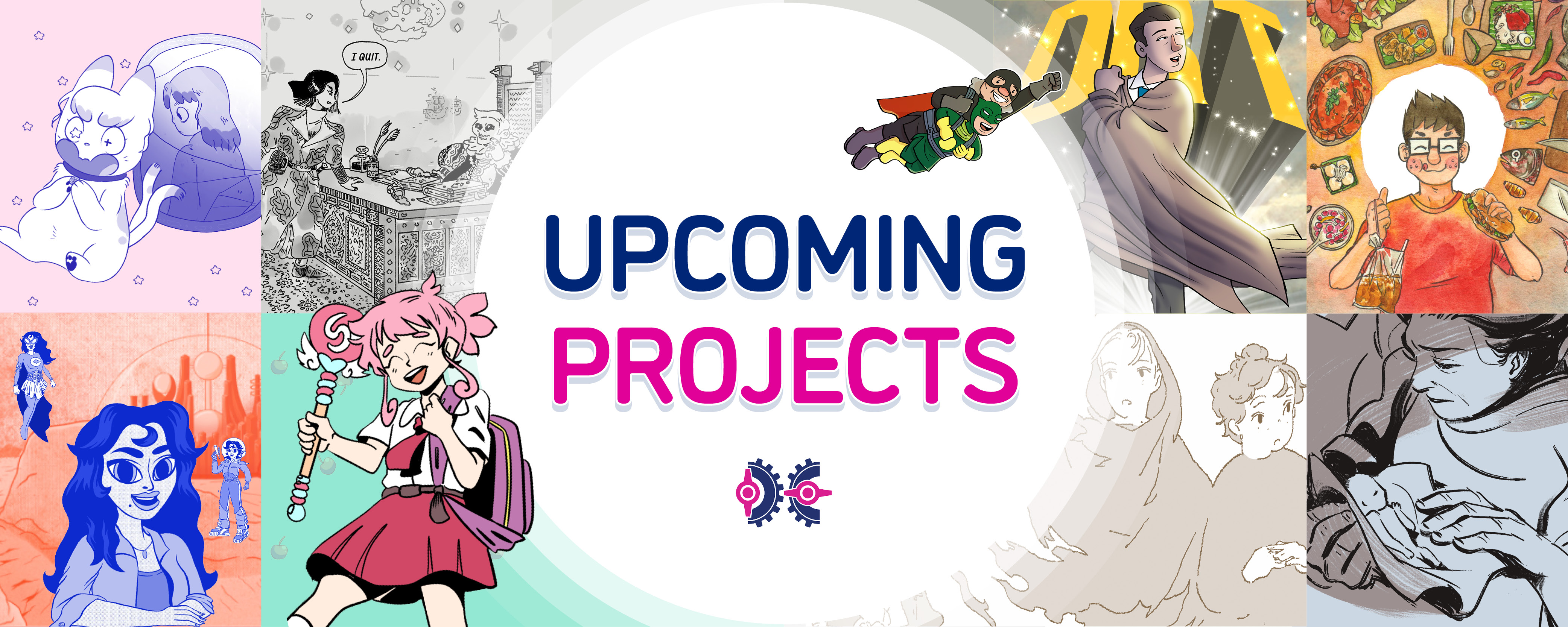
1 March 2024, Singapore — Difference Engine is proud to announce its 2024 catalogue which includes five new projects and titles across the adult, young adult, and children’s categories. In line with the independent publisher’s mission of putting Southeast Asian voices on the map, this upcoming slate of projects includes works by creators from Singapore and Indonesia as well as a comics anthology featuring writers and illustrators across the region. 

2024–2025 marks a series of firsts for Difference Engine with its debut webcomic and audio comic accompanying the print release of upcoming titles Tiger Girls and To the Last Gram respectively. Tiger Girls, a young adult fantasy comic written by Felicia Low-Jimenez and illustrated by Claire Low, is the graphic adaptation of Low-Jimenez’s short story first published in Singaporean speculative fiction anthology Fish Eats Lion Redux. Against the backdrop of a tropical Southeast Asian island made fantastical by Low’s manga-inspired art style, a restless young record-keeper, Suling, reckons with the Chinese superstition that casts girls born in her zodiac year, the tiger, as bringers of bad luck. From July 2024 onwards, readers can follow Suling’s ensuing quest to find her place amongst the island’s Water Tiger warriors as Tiger Girls gets released episodically as a free eight-part webcomic. Future fans of the series can also expect the subsequent print edition in 2025 to include never-before-seen bonus content.

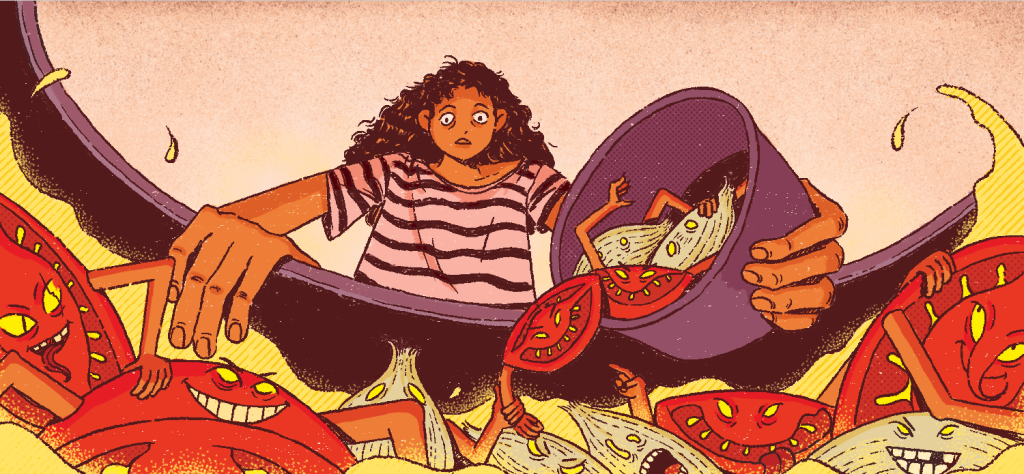
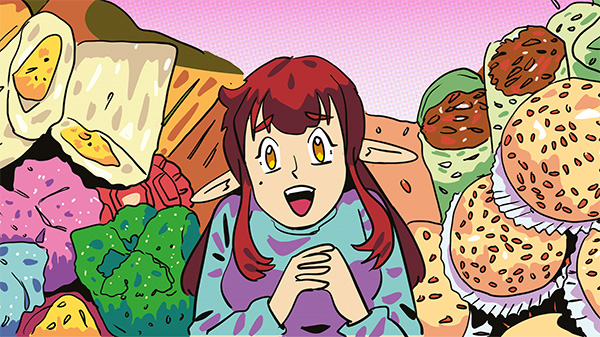
Expanding on Difference Engine’s DE Shorts imprint, To the Last Gram is the fourth in this series of short comics that spotlight stories of lived and shared experiences around a range of social issues. Shreya Davies’ lyrical prose provides a gentle touch to the heavy subject of eating disorders in her depiction of Divya’s tumultuous relationship with food and body image. it is underscored by Vanessa Wong’s endearingly off-kilter illustrations which transform typically mundane moments into evocative scenes of modern anxiety. Young adult readers will find familiarity with Divya’s struggles of cultural acceptance, growing up, and fitting in as the narrative traverses between various stages of her life. The October 2024 print release of the comic will be followed by an audio comic adaptation in 2025 – a growing format for graphic narratives that translates the immensely visual medium of comics and its illustrative features into immersive experiences through sound effects, narration, and dialogue.

Illustration for To the Last Gram

Low-Jimenez, also the Co-Founder and Publisher of Difference Engine, shared, “Venturing into the world of web and audio comics is a chance to reach out to a wider audience than ever before. Any opportunity to make comics more accessible is worth the challenge, and we are also interested to see how we can foster new communities and fandoms around our works.”

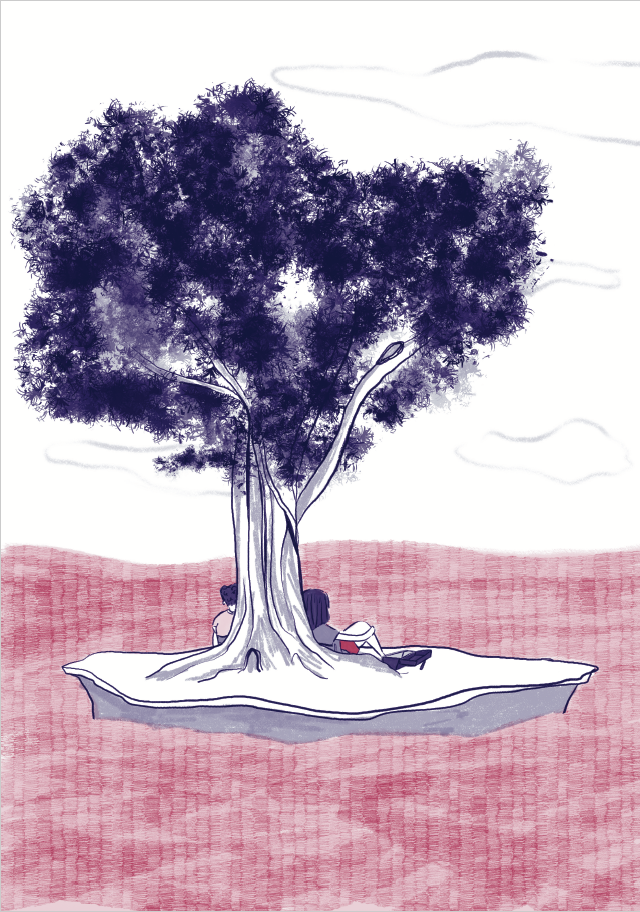
Illustration for Unbecoming Maya

Young adult readers can also look forward to Andeasyand’s Unbecoming Maya, slated for release in 2026. Following the success of her 2021 DE Short A Drip. A Drop. A Deluge: A Period Tragicomedy, Andeasyand continues her colourful musings on adolescence, friendship, and bodily changes in this coming-of-age story illustrated in her signature whimsical style. Exploring the topic in a full-length comic this time, Unbecoming Maya might be a departure from the short vignette-style format of A Drip. A Drop. A Deluge, but still centres the conversation about menstruation and periods in an even bigger way.

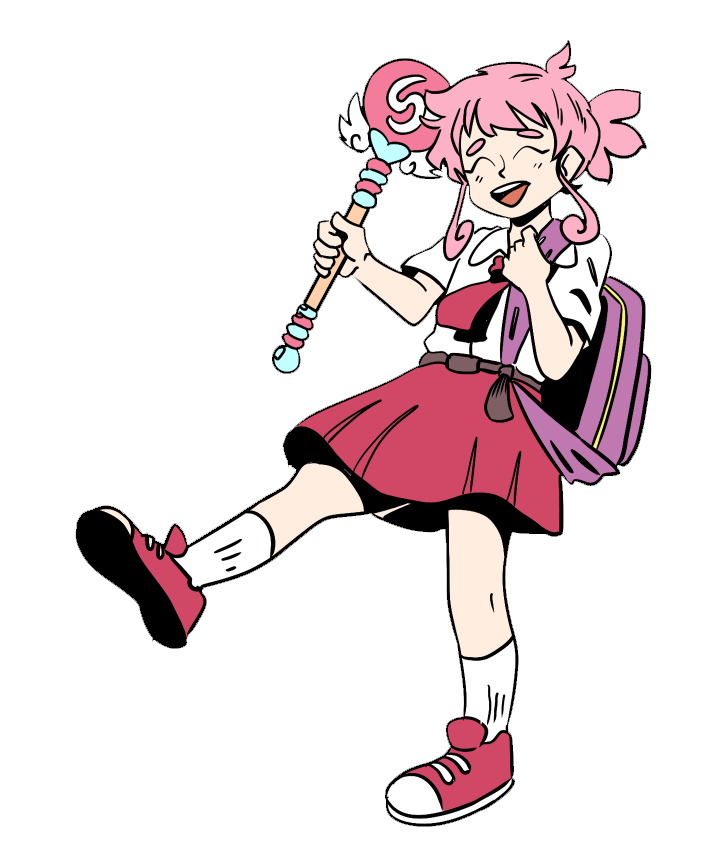
Gula Gulali of The Magical Sweet Gula

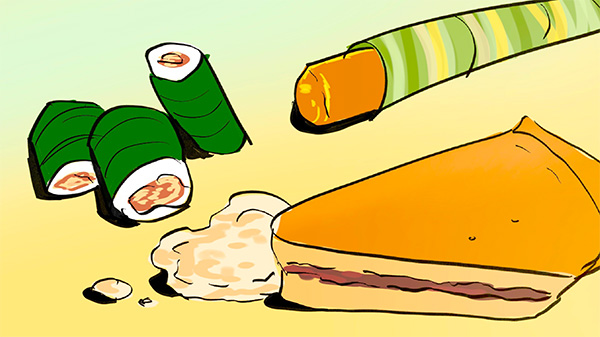
Adding to Difference Engine’s children’s titles is Indonesian artist-writer couple Johanes Park and Jessica Leman with The Magical Sweet Gula 2 & 3, the final two instalments of their Magical Sweet Gula trilogy coming out in 2025 and 2026. Gula Gulali returns for more inter-dimensional hijinks across the decadently illustrated worlds of magic and non-magic as she continues to turn more things into dessert with her magi powers.

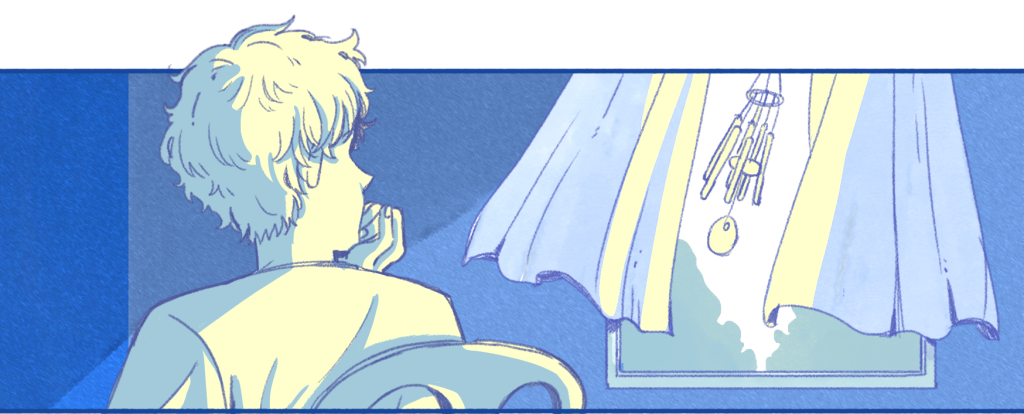
Rounding off Difference Engine’s forthcoming titles is DELAY: A Comics Anthology, the publisher’s second collection of short comic fiction following SOUND: A Comic Anthology. As part of the anthology, Southeast Asian creators are invited to submit story pitches that interpret the theme of “delay” in unexpected ways. Creators whose pitches are chosen will get a chance to work with a veteran editorial team comprising Malaysian illustrator and educator Charis Loke in a reprisal of her role as co-editor of SOUND, as well as Filipino prose and comics writer Paolo Chikiamco who was previously a contributor to SOUND.

Illustration for DELAY: A Comics Anthology

“It’s the beginning of a milestone year for Difference Engine as we make room for more ambitious projects that push the boundaries of how stories can be told,” added Low-Jimenez. “Especially with our first foray into the US and international markets together with Diamond Book Distributors, it’s an exciting year of growing and learning for us while still staying true to our core of creating space for lesser-known stories.”

Check out Difference Engine’s 2024 Catalogue here.


Follow Difference Engine on:

For enquiries, contact:

Olivia Djawoto
Marketing and Communications Manager
Difference Engine
olivia@differenceengine.sg

[PRESS RELEASE] What’s The “Delay”?: Difference Engine Launches Open Call for Second Southeast Asian Comics Anthology

1 March 2024, Singapore — Difference Engine is excited to launch its open call for Southeast Asian illustrators and writers to submit story pitches for DELAY: A Comics Anthology, the Singapore-based comics publisher’s second collection of short comic fiction. The anthology is slated for publication in 2025. 

From 1 March – 26 April 2024, creators can submit their ideas for Southeast Asian inspired narratives that interpret the theme of “delay” in unexpected ways. With the one-word prompt as a broad canvas from which a multitude of angles can be explored, creators are encouraged to put their own spin on the subject whether it is about looming milestones, resisting mainstream expectations, or doing life at one’s own pace.

Following the success of Difference Engine’s first anthology SOUND: A Comics Anthology (2020), Malaysian illustrator and educator Charis Loke reprises her role as co-editor of the anthology alongside Filipino prose and comics writer Paolo Chikiamco who was previously one of the contributing creators for SOUND. Both veterans in the Southeast Asian comics industry, Loke and Chikiamco’s combined experience in editorial direction, comics creation, and visual storytelling speak to their capability as an editorial team guided by creative collaboration and a strong sense of identity. 

Speaking in anticipation of the forthcoming submissions, Loke commented, “I’m excited for stories that use relationships between text and visuals to craft specific sensations of time on the page. Make us feel! Make us wonder! Make us see the world differently without being didactic about it.”

Chikiamco added: “I’d like to see stories that are comics stories first and foremost, submissions that are created with an eye to the strengths and capabilities of comics as a medium, with modes of expression that simply wouldn’t work anywhere else”.

The open call anthology format has been crucial in Difference Engine’s initiative to discover, develop and showcase the talents of local and regional creators. Difference Engine Co-Founder and Publisher Felicia Low-Jimenez remarked: “As a young independent press, SOUND was pivotal in establishing Difference Engine within the regional comics scene. The anthology helped to connect us to so many talented creators across Southeast Asia, many of whom we’re excited to potentially work with in the future. Particularly with our new foothold in the US and international markets through our partnership with Diamond Book Distributors, we hope DELAY will present new opportunities for us to grow and amplify Southeast Asian voices”.

Echoing Low-Jimenez’s sentiments, Chikiamco also concluded: “Difference Engine is proudly Southeast Asian, this anthology is proudly Southeast Asian, and we want (the) stories to be as well”.


Follow Difference Engine on:

For enquiries, contact:

Olivia Djawoto
Marketing and Communications Manager
Difference Engine
olivia@differenceengine.sg

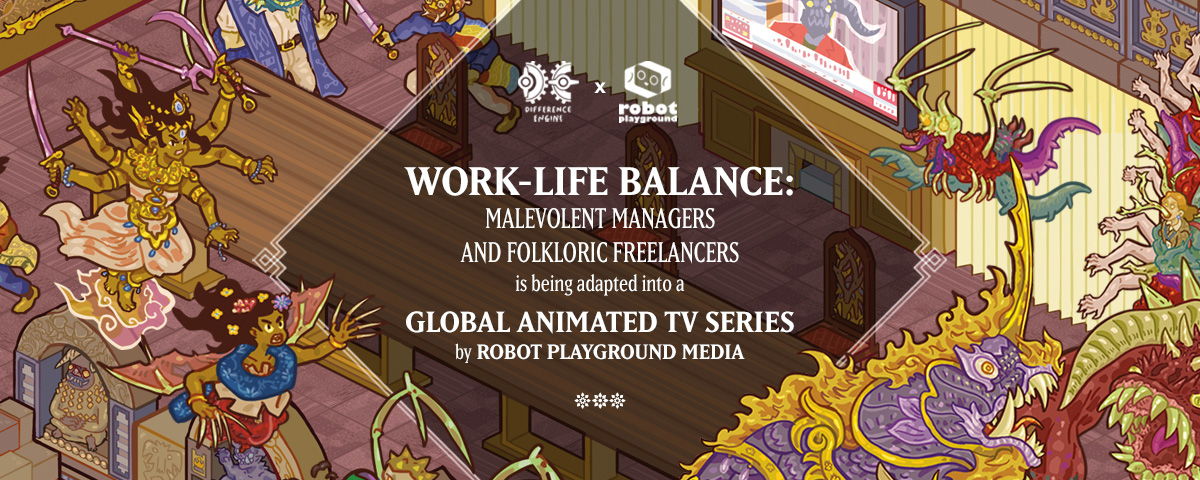
ROBOT PLAYGROUND MEDIA ADAPTING SINGAPORE’S 2023 BOOK OF THE YEAR, GRAPHIC NOVEL “WORK-LIFE BALANCE”, INTO GLOBAL TV SERIES

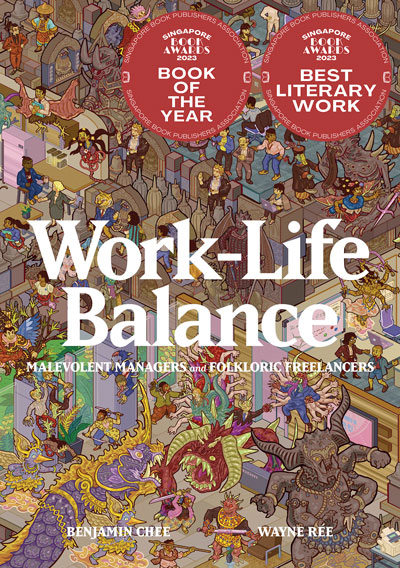
Singapore-based animation studio Robot Playground Media (RPM) has picked up rights to Work-Life Balance: Malevolent Managers and Folkloric Freelancers (WLB) by Wayne Rée and Benjamin Chee, published by Difference Engine (DE). The book, a genre-blending graphic novel that draws on Asian mythology while taking a wry look at corporate life, won Best Literary Work and the coveted Book of the Year at the 2023 Singapore Book Awards. It will now be developed into an animated comedy series for audiences across various platforms and territories.

RPM’s co-founder and showrunner Ervin Han will lead the development out of Singapore, together with the studio’s creative teams in Indonesia and Malaysia. He previously created the award-winning local adult animation Downstairs that ran for three seasons on Netflix and meWATCH, and is producing A Banquet for Hungry Ghosts, an adult horror animation that won Mediacorp’s Content Development Pitch in 2022. He is also currently in production directing The Violinist, a feature-length animation co-produced between Singapore and Spain with both countries providing funding support.

Rée and Chee’s book uses an intriguing juxtaposition of comics and prose to spin a fresh yet familiar tale about a multinational corporate run by demons called The Company whose mission is to end the world. With its new APAC office, folklore creatures like pontianaks, manananggals, raksasis, and ba jiao guis are assimilated into corporate life where they find new meaning in dead-end work and truly hellish bosses.

The team is aiming to put the series into production this year and will be looking to partner up with co-producers and platforms on what they see as a unique but universally appealing international project aimed at youths and working professionals that weaves a rich, colourful Asian cultural and mythological tapestry with a much-needed reflection on soul-draining work culture and bosses from hell.

“Wayne and Ben’s book is a little miracle. It combines our love of Asian mythologies and its folkloric ghouls with a satirical study of the soul-crushing pit that is corporate life,” said Han. “So many of our ideas gelled quickly when I sat down with both creators to discuss what we all envision for the show – a contemporary, genre-infused adult comedy about bosses from hell that also contemplates the things we give up in the name of making a living.”

“As fans of Downstairs and RPM’s animation, we’re thrilled to be working with them,” said Chee and Rée. “We already had faith that they would do the book justice – but after speaking with Ervin, we’re absolutely certain that they’ll elevate the world we’ve created. Work-Life Balance is a love letter to the stories we grew up with and the craft of storytelling. RPM gets that completely and are expanding on it in a way that plays to the strengths of animation.”

“We are very excited to work with Robot Playground Media to adapt Work-Life Balance into an animated TV series,” said Felicia Low-Jimenez, Publisher at Difference Engine. “We’ve long admired the work they’ve done, and we can’t wait to see Wayne and Ben’s dream of a world full of overlong meetings and pesky press releases being liberated by magic and mayhem on the small screen!”

For enquiries, contact:
Tracy Tam (General Manager, Robot Playground Media) at tracy@robotplaygroundmedia.com
Charlene Shepherdson (Business Development Manager, Difference Engine) at readcomics@differenceengine.sg

Robot Playground Media is an award-winning animation studio based in Singapore.  We produce original IP and provide a range of production services including 2D/3D animation, visual effects, and motion graphics. ‍ We have produced original and adapted IP-to-series for Disney, Warner Bros Discovery, Paramount, and Mediacorp, among others. Robot Playground Media was founded in 2013 and is a subsidiary of Singapore and London-based 108 Media.

Difference Engine is an independent comics publisher based in Singapore. We are inspired by stories from Asia, and we are committed to publishing diverse, well-written, and beautifully illustrated comics of all genres and ages. We collaborate closely with Southeast Asian creators, both new and experienced, with genuine and thought-provoking ideas to share. Difference Engine was founded in 2018 and is part of the Potato Productions group of companies.

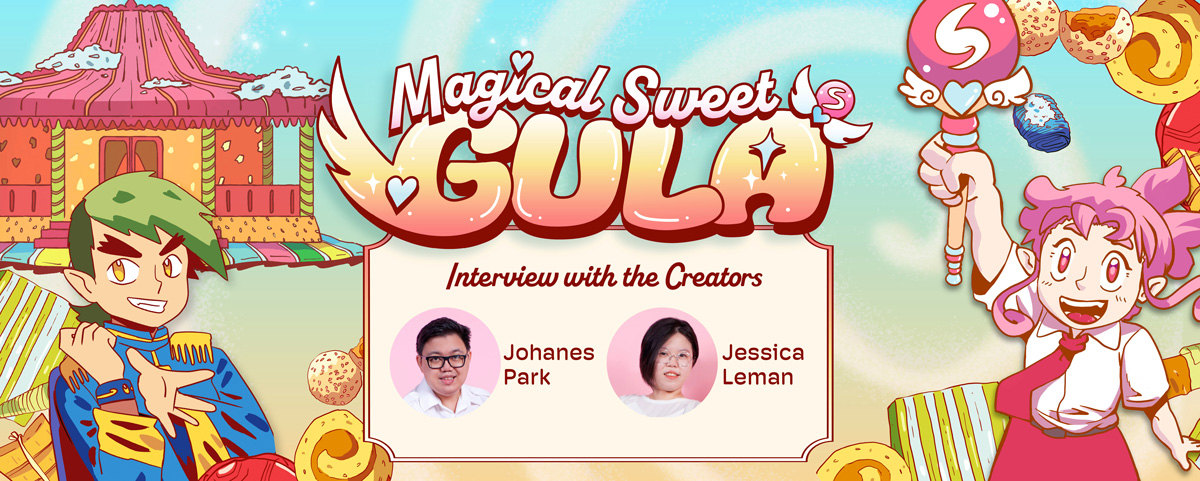
Meet the Creators: Magical Sweet Gula

Hailing from Jakarta, Indonesia, Jessica Leman and Johanes Park are the creator duo behind Magical Sweet Gula. Difference Engine chats with the husband-and-wife team about their experience working together, how their identities have informed the story and its themes, and what readers can look forward to as the series progresses!

DE: Congratulations, Jessica and Johanes, on the release of your comic!

J&J: Thank you!

DE: What is it like working in a husband-wife team? Which parts of the process would you consider “sweet” (good), and which parts would you consider “spicy” (challenging)?

J&J: The “spicy” parts were when we sometimes needed to sacrifice our after-work hours on weekdays to work on Gula. We consider this challenging because we each have our own problems and exhaustion from our workplaces. We didn’t have the luxury of time to relax and talk about our day at the office.

The “sweet” part is that we never run out of discussion topics and can research ideas, concepts, and references everyday. We play games, go to bookstores, watch movies together, and discuss them together.

DE: Besides being comic creators, both of you juggle full-time work – Jessica as a digital marketer, and Johanes as a university lecturer. How do you balance your time between your day jobs and your creative pursuits?

J&J: We’ve set a rule that we will develop our comic project for at least one hour per day. We’ve made it a habit. So we still have time to do pending things from work, or other tasks needed, and prevent things from piling up too much near the deadline.

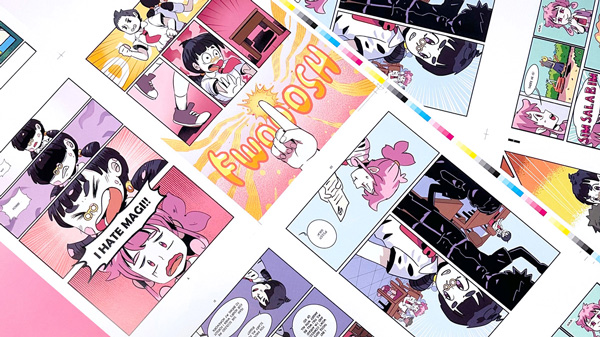
DE: Magical Sweet Gula was originally conceptualised and self-published online in a webcomic format. What were some challenges both of you faced when trying to adapt the comic to a print format?

How does the change in publication format affect the storytelling aspect of Magical Sweet Gula, if at all?

J&J: We are glad Gula has finally been adapted into a print format. With webcomics, people usually encounter many distractions as they read them from a computer or smartphone. We tried not to bring up more serious topics in the webcomic format as it was intended for “short attention span content” — something funny and light. So to be honest, making Gula in a webcomic format was more challenging for us.

The other reason is because we are more familiar with printed formats. We have been used to reading manga since we were young.

DE: What would you say is the biggest difference between the Gula webcomic and the print comic book Magical Sweet Gula?

J&J: In the previous webcomic format, we were advised to feature cakes that are more “general”, for the readers’ benefit. We are glad to be able to realise our idea of using Indonesian sweets and snacks in this printed version of Gula.

The development of Gula and Yoga’s friendship is explained in more detail in the print comic book, which makes Gula’s character more “natural”. Gula is not a perfect girl who always has good behaviour and attitude. She can sometimes be angry at and disappointed in people.

DE: Magical Sweet Gula touches on some heavier themes like bullying and trying to fit in. Why was it important to you to ground Gula’s experiences in real-world issues and make it the heart of the comic?

Johanes: Magical Sweet Gula is actually my way of pouring out my feelings of alienation in my birth country and my parent’s country. Self-discovery is difficult for mixed-race and/or transnational children. It’s important because these kinds of people need to “create” (not to find) their own meaning, existence. We are disconnected from our ancestors, what we consider good or bad can be reversed in both countries, and it can be confusing even for adults. 

The role of adults is also important (that’s why Miss Sacha is an influential character in this story) to understand and be able to guide these mixed race and/or transnational children on their journey to create their own meaning. That “journey” is the big theme of Magical Sweet Gula and it will be continue in the next volume.

DE: Who is your favourite character in Magical Sweet Gula, and why?

Johanes: Sally, who also suffers because of her identity. The way she vents to other people is really relatable to me. I also like Yoga because I aspire to be more like him — not afraid of new things.

Jessica: Gula! I really feel for her when she needs to be considerate with other people. Also, I want full, fluffy, pink hair like her, haha.

DE: The original Gula webcomic was published in Bahasa Indonesia, with many of the quips and snack recipes strongly influenced by Indonesian sweets and street food. The print version of the comic has been adapted to English to suit a more general audience.

Were there any concerns about how well the writing and snacks would translate to readers who may not be familiar with Indonesia?

J&J: We are currently growing up in a more global society and have sufficient technology literacy. Nowadays, when kids find something like an unfamiliar word their curiosity will immediately lead them to do a search in a search engine like Google — or so we hope. So we honestly do not really have any such concerns.

Secondly, we are proud of these Indonesian snacks and want to adopt the mentality of “This is good, you should know about this!”. If people are familiar with kimbap and onigiri because of K-dramas and manga, then people could become familiar with lemper and they can start learning about it from our comics. If people from other countries can be that confident about their food, why can’t Indonesians?

DE: Which of you is the bigger snack fiend, and what is their favourite snack?

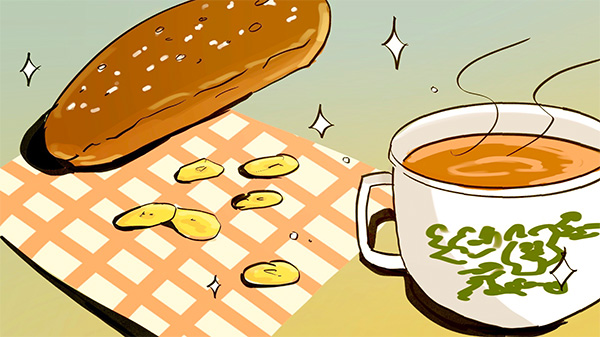
Jessica: Jo is. He can’t live without his (minimum) two cups of coffee a day, with sweet accompaniments such as roti gambang, his favourite. He also likes banana chips.

DE: What is one snack/street food each of you really wanted to include in Magical Sweet Gula? Did it manage to make an appearance? (If not, will it be included in Volume 2?)

J&J: There are so many! Yes, we will try to include them in the next volume — clorot, lemper, rengginang, martabak, and so on.

DE: If you were to describe your individual creative process as a street food snack, what would it be, and why?

Johanes: Lemper, which is a very common snack that appears at every occasion. Lemper can be considered a snack that could replace rice. You can eat it everyday. My creative process is just becoming a habit for me: I divide my projects into bite-sized parts and tackle them daily.

Jessica: Kue lapis. There are so many types of kue lapis: lapis legit, lapis surabaya, lapis bogor, and many more. You can’t eat them every day but when you eat them you probably will eat more than one slice. I am not as diligent as Jo; I slack off more often but when I start I tend to jump from one creative project to another in one go and sometimes back and forth.

DE: What other forms of media do you enjoy? If you could adapt Magical Sweet Gula to one other creative medium, what would it be and how would you want it to look?

J&J: We enjoy animation. We were big fans of Nickelodeon and Cartoon Network series, like Hey Arnold! or The Wild Thornberrys. Or for more recent references, it would be nice if an animated adaptation of Gula looks like Scott Pilgrim Takes Off, the new animated series on Netflix.

DE: If you could give Magical Sweet Gula to anyone in the world, who would it be, and why?

Johanes: Bryan Lee O’Malley, Gene Luen Yang, Henry Jenkins, Fukuchi Tsubasa (The Law of Ueki), all of whom inspired me to make the Magical Sweet Gula graphic novel.

I also wish I could give it to my late teacher Prof. Sapardi Djoko Damono who taught me and expanded my knowledge during my graduate study, my late father Park Byung Sup, and my biggest inspiration Osamu Tezuka.

And all the children of mixed parentage all over the world, of course!

DE: Finally, would you rather be born a Terran or Magi in the world of Magical Sweet Gula? Why? (If you answered Magi, what magical abilities would you want to have?)

Johanes: It doesn’t really matter, but I love the way we are now. I prefer to be like Gula — half Terran, and half Magi.

DE: Are there any tidbits or sneak peeks you can share with your readers for the next volume of Magical Sweet Gula?

J&J: After the development of Gula and Yoga’s relationship, there will be a development between Gula and Sally. While in the first book they seem to be on different sides, they actually have the most in common — more than Gula does with any other character in the story, even Yoga.

Also, you can look forward to Gula showing off her growth and new magical powers!

Get your copy of Magical Sweet Gula via our webstore or via our retail partners listed here!

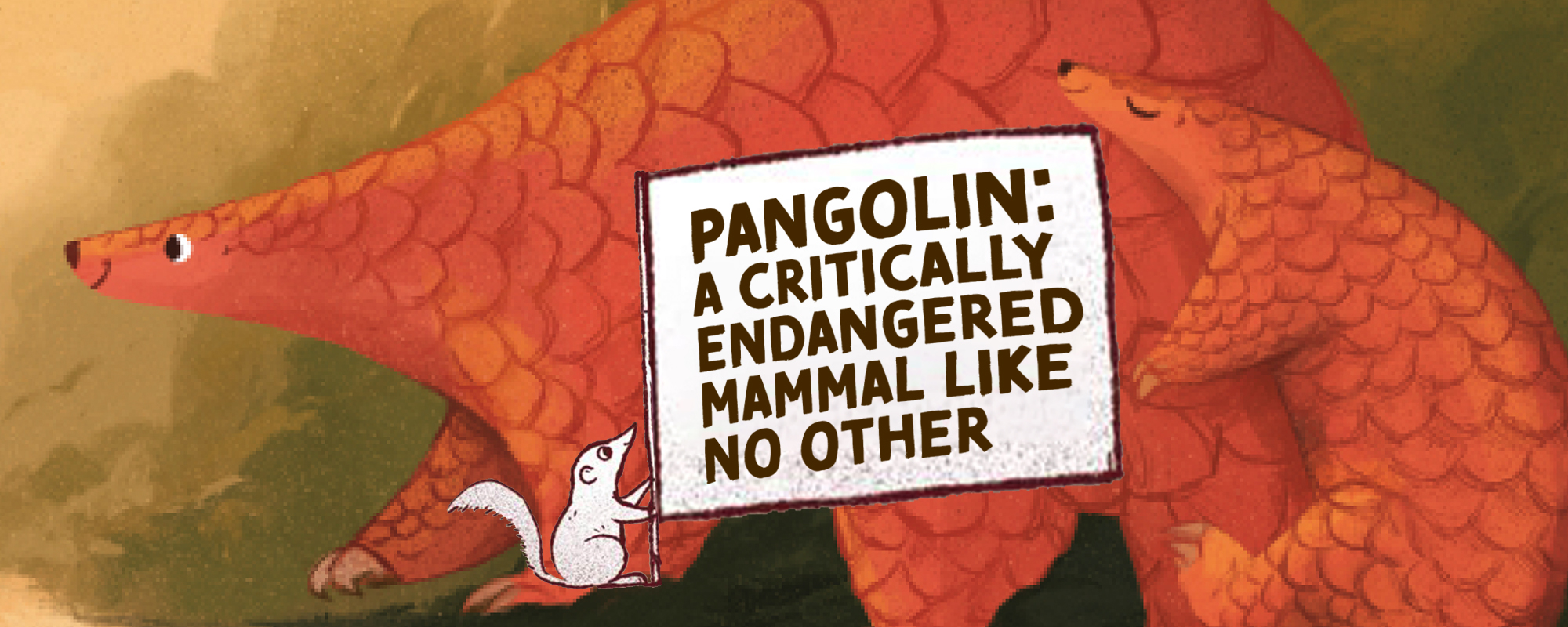
Pangolin: A Critically Endangered Mammal Like No Other

What marvellous mammal has armour that will make a knight envious, and can curl up into a near-perfect sphere?

It’s the pangolin!

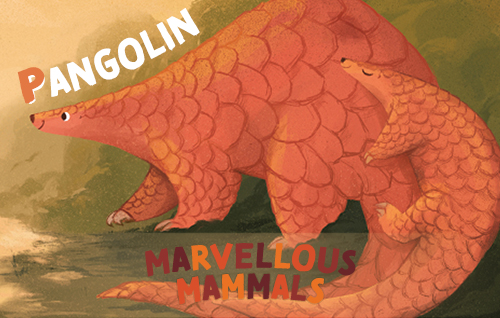
If this is your first time hearing about a pangolin this World Pangolin Day or World Wildlife Day, it might seem like a render from a video game. A mammal – nope, not a reptile – covered in scales? It looks almost like a waddling pinecone or a less flamboyant dragonfruit!

Pangolins are unlike any other mammals. That’s not a hyperbole. They are currently the only mammal discovered that is fully covered in scales! That brings us to our first phenomenal pangolin fact:

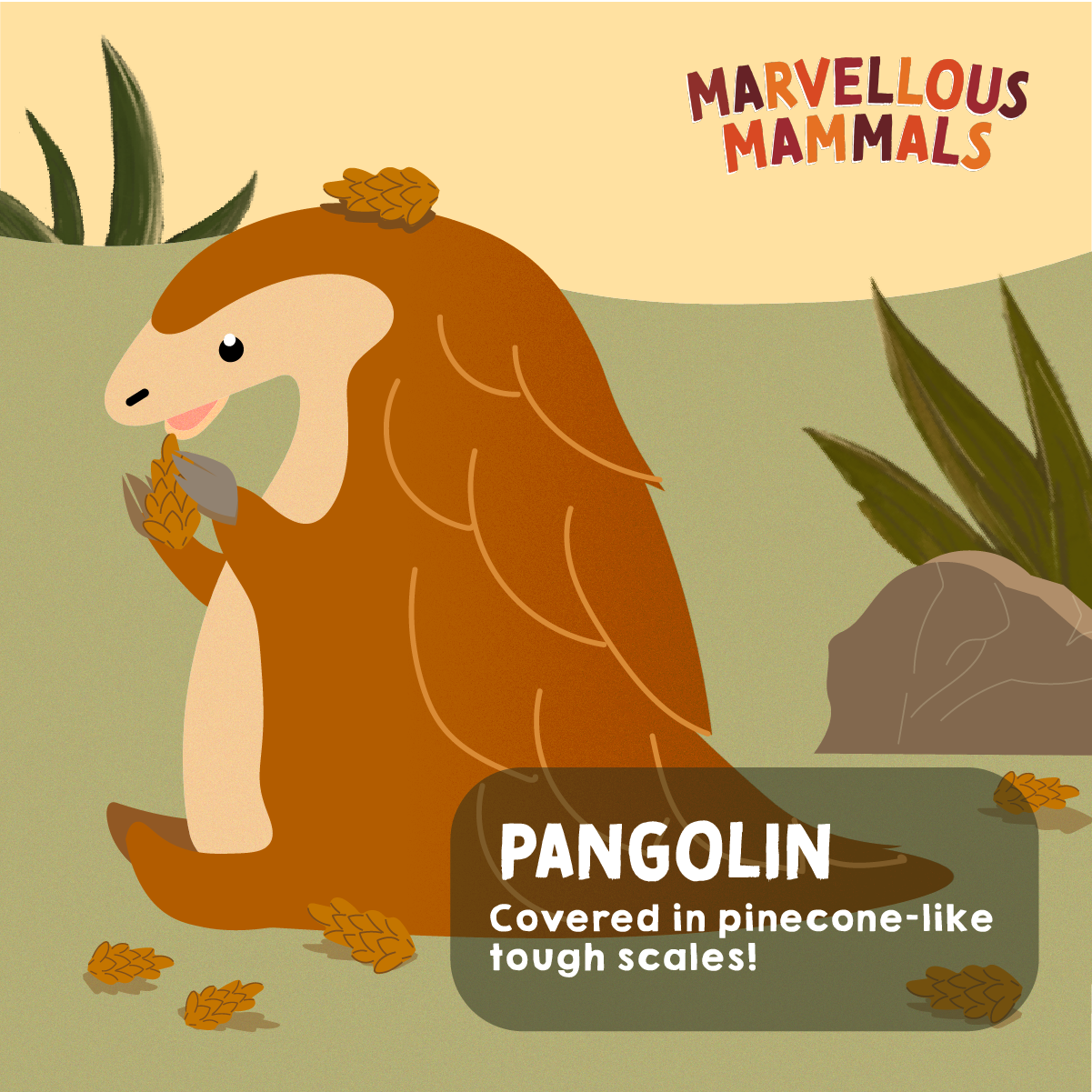
1. Pangolins are covered in pinecone-like tough scales made of keratin.

While we may not see any similarities between our bodies and the impressive scale mail pangolins don, believe it or not, the sturdy coat of overlapping scales is actually made of keratin – the same thing our nails and hair are made out of.

Keratin renders the scales hard and durable. Each scale is made of tightly compressed hair finished in a sharp tip for that extra offensive edge. (Although your mileage may vary with a tub of hair gel and a tail comb.) These scales are arranged in a partially overlapping lattice to provide optimal protection without compromising on flexibility.

Equipped with a coat that will give Colossus a run for his money, how does the pangolin utilise it against its natural enemies?

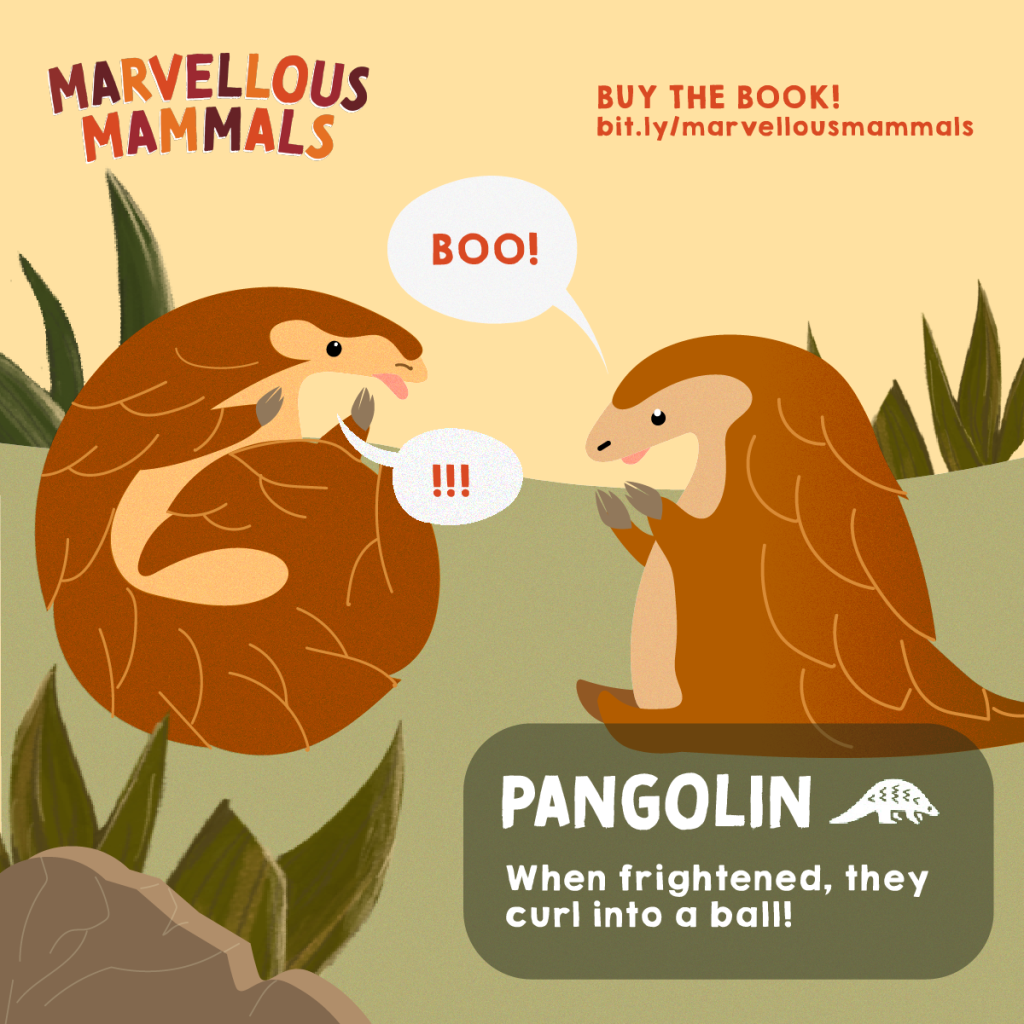
2. Pangolins curl into balls when frightened.

Let’s just say they get all dressed up with nowhere to go. Deliberately.

You see, pangolins have one weakness: Their soft underside.

To protect their tender tummies, they cover their head, tuck themselves into a tight ball, and let their scales do the rest of the work. It’s nature’s way of giving the pangolin an instant “nope” button whenever they feel stressed or frightened. So recognisable is this ability that the World Wildlife Fund explains the name “pangolin” is derived from penggulung, the word for roller in Malay.

Pangolins can also weaponise the sharp scales on their tail if they perceive a Big Bad Evil Guy, but their poor vision does not do them many favours.

Against its natural predators like big cats or hyenas, this defensive bunker tactic works. Really well.

Ever seen photographs of lions pawing or chewing frustratedly at a balled-up pangolin? The scales make pangolins nearly impervious to bites and uncomfortably prickly to those who try to unroll it. It may look hilarious, but more importantly, it is a testament to how effective this evolutionary trait is.

Against a human hand however, that’s a different story. (We’ll get back to this later.)

If it’s not already obvious from their preferred type of engagement with predators, pangolins are quite shy. Part of it is due to this third phenomenal pangolin fact:


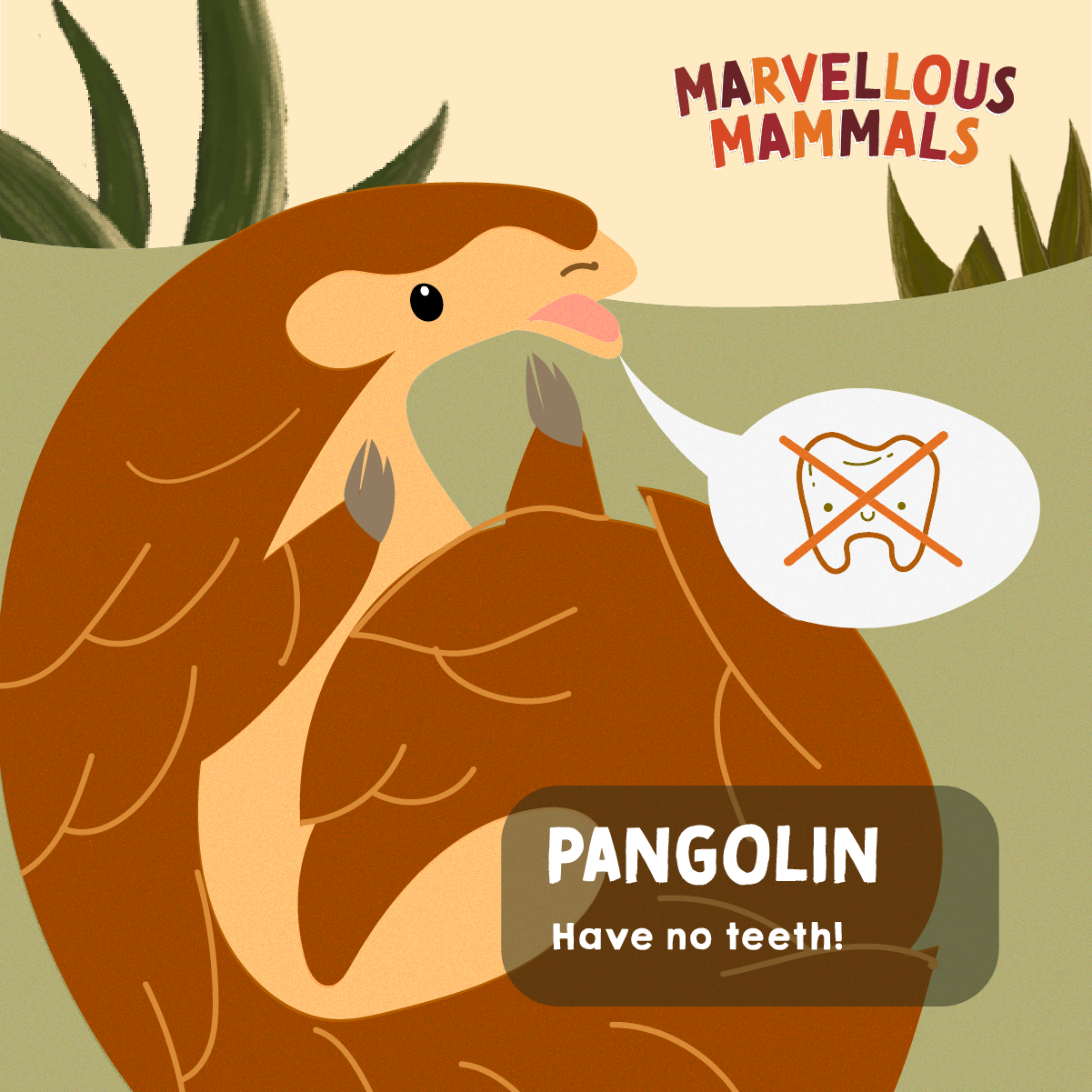
3. Pangolins have no teeth.

You read that right. Like boy bands of the early 2000s, pangolins devoted all of their spikes to their head and ‘fits, while hiding their true docile nature from hungry pap-, predators.

Another name that pangolins are commonly known by is the scaly anteater. (No prizes for guessing their favourite bites.)

A typical day of a pangolin sees it in its burrow or on trees with its nose set on the nearest ant colony or termite mound. Once settled into their selected buffet of the day, pangolins utilise their very long, very sticky, very thin, saliva-coated tongue to slurp up their meal – with adults vacuuming up to a suggested 70 million insects each year according to Singapore’s National Parks Board! (Try getting your exterminator to go up against this ant-agonist’s scoreboard.)

As a very nice bonus, the action of vacating insects from their tunnels lends to aerating the ground, thus improving soil health in the area. Given their current repertoire, they probably have greener thumbs than most of us city dwellers!

Wait, if pangolins can’t chew, how do they digest their food, hard exoskeletons and all?

The answer is rock ‘n’ roll. Literally.

Pangolins eat rocks. To make up for their lack of teeth and their penchant for ants over bean sprouts, pangolins intentionally ingest small rocks, called gastroliths, for storage in their gizzard. As the gizzard contracts, the rocks roll and churn, which in turn grinds down the food.

A simple and effective solution by nature. But sadly, this lack of teeth is a handicap against humans. (Starting to see a pattern?)

Artwork from Marvellous Mammals: A Wild A to Z of Southeast Asia

4. Pangolins are currently the most trafficked mammal in the world.

Unfortunately, this last fact about pangolins isn’t very fun at all.

There are eight pangolin species in the world. Three of the four Asian species, including the Sunda pangolin that calls Singapore its home, is Critically Endangered.

For most of their existence, pangolins have been a solid contender for predator-prey relationship manager of the year. (Considering how even their most enterprising enemies struggle to take a literal bite out of them, they were doing pretty well.)

Then everything changed when greedy humans attacked.

The spherical fortress that pangolins have evolved is excellent against most threats… Except traffickers, with their dexterous, grasping hands and voracity for greed, aren’t most threats. Spook the pangolin, wait for it to roll into a ball, and simply carry them away – like Gen Z in a macabre medicine ball fitness class.

That is precisely what many poachers boil these unique mammals down to: Very expensive and very high-value literal medicine balls.

In Asia, some traditional medicine practitioners fight tooth and nail to continue touting the supposed curative properties of pangolin scales and blood. Pangolins: Science, Society and Conservation announced that approximately 195,000 pangolins were trafficked for their scales alone.

Nevermind that it has been scientifically debunked that pangolin scales have no medical properties, and chewing fingernails has never proven effective in any quest to cure inflammation/lactation issues/cancer/what-have-you.

And those who don’t use pangolin scales for pseudo-medicine, use it to scale up their leather fashion products in the United States and Mexico.

That’s not all: Another big driver for pangolin trafficking is meat. (Notice how it is reported as meat, and not food.) Hunting pangolins for bushmeat is not new – pangolins have been a food source in Africa and China historically. But with the proliferation of food supply chains worldwide, pangolins are no longer necessary as a staple food source. So, why the demand for pangolin meat?

In this age of abundance and accessibility, having suckling pig or duck confit daily no longer signals wealth and exceptionalism. You need something more exclusive, something rare, to really get tongues wagging.

Introducing the delicacy du jour of parts of China and Vietnam: The pangolin.

If the thought of sampling a pangolin does not make you baulk, the price tag surely will. In a paper by Wang et.al. (2021), the price of a whole pangolin can fetch anywhere from 2,000 to 3,400 yuan (~290USD to 495USD) per kilogram.

Even though the population of wild pangolins in Asia has declined by over 50% in recent years according to the Center for Biological Diversity, the demand for their flesh and scales remains insatiable. Can’t find pangolins in Asia? Just take them from Africa and ship them over. This hunger for pangolins is so strong that from 2015 to 2021, almost half of all pangolin derivatives confiscated in Asia are found to have been brought over from Africa.

Since 2019, there has been a global consensus in banning pangolins from commercial trade internationally. While that has led to more seizures and discoveries of illegally trafficked pangolins, poachers still find ways to circumvent law enforcement. Money, it turns out, is a great motivator for… creativity.

This World Pangolin Day and World Wildlife Day, especially if your days are spent roaming in metropolises, the predicament of pangolins may feel removed from your lives. But wait: How can we get pangolins from the depths of our forests, to the nouveau riche trying to be the next photocopied version of the Kardashians in cities?

The answer is that it is inevitable for pangolin traffickers – and a lot of the illegal wildlife trade – to funnel a considerable amount of their operations through urban areas. In 2019, World Wildlife Fund Singapore reported that a staggering 35 tonnes of pangolin scales (around 40,000 pangolins) were seized by port authorities.

What can I do to help?

As individuals, all this may seem overwhelming. It is. And if you – understandably – do not intend to go up against international criminal organisations, can you really do anything of meaningful impact then?

The short answer is: Yes.

Although the pangolin is no Billie Eilish of the endangered animal world, they are charismatic enough for children and adults alike to pause and go, “hey, that’s one cool mammal!” That is a good, even great, first step.

For context, in ‘Generally ignored’ species face twice the extinction threat, warns study by The Guardian, it was shown that the extinction rate in insects is eight-fold more than birds, mammals, and reptiles, and receive nearly 500 times less funding for each species than vertebrates. In other words, the more you like something, the more funding it receives. (Usually.)

The next step is simple: Talk, share – shout, even! – about all you know about pangolins! Tell them to your friends and family, use your knowledge as a potential ice-breaker for conversations, or even showcase your knowledge at your next quiz night; chat about them to those who are willing to listen.

When your conversation ends, and everyone goes their separate ways, that’s when the ball really gets rolling. All these phenomenal pangolin facts no longer exist in isolation – they instead live in voices, echoed in the people we have met, and finding new homes in the places we have travelled through.

Two decades ago, you may not have heard of the pangolin. Now, it is a marvellous mammal that is starting to be recognised even outside of Asia and Africa.

The next time you, or someone you have spoken to, encounters a pangolin, this knowledge will guide their encounter. Spotted a lost pangolin in the city? Found medicine shops illegally selling pangolin scales? Spied someone in a bad Solid Snake cosplay setting traps in forested areas? Things that could have unintentionally slipped by one’s radar can now find anchor in one’s knowledge of pangolins.

(For those wondering what to do in the aforementioned scenarios in Singapore, the answer is to call the National Parks at 1800-471-7300.)

We will leave you with two adages at the end of our World Pangolin Day and World Wildlife Day piece: “Knowledge is power” and “sharing is caring”. While global lawmakers and conservationists are working to tighten regulations and protection for these marvellous mammals, we can help them on the ground by keeping a literal eye out for pangolins, especially those in plight.

The scales are not tipped in favour of the pangolins, but it is not too late for us to prevent the final nail in their potential coffin.

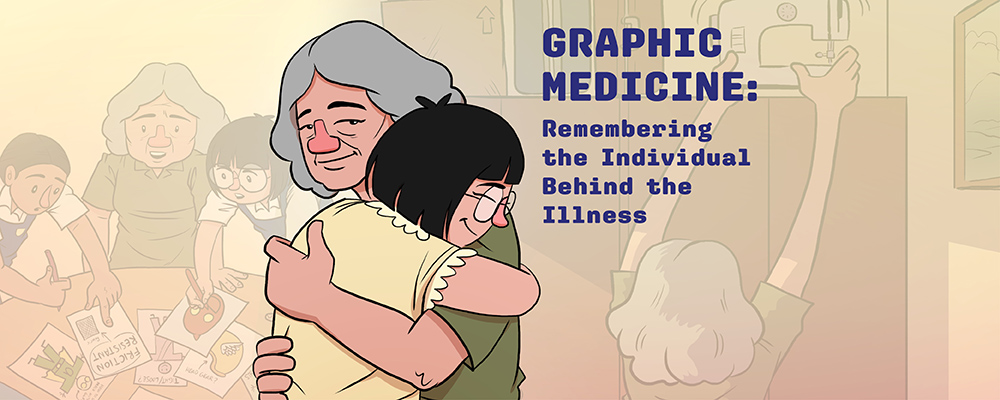
Graphic Medicine: Remembering the Individual Behind the Illness

During these pandemic times, you have probably encountered short comics or infographics on social media about COVID-19, such as illustrator Kow Wei Man’s viral infocomics on staying safe during the pandemic, or The COVID-19 Chronicles, an ongoing educational comic series by NUS Yoo Loo Lin School of Medicine.

These comics may differ in style and presentation, and they may be created by artists with different backgrounds, but they do have one thing in common: They inform and engage the audience on medical topics through a confluence of art and science.

You may wonder, in a field dominated by hard science and numbers, what role can art play?

Say hello to graphic medicine.


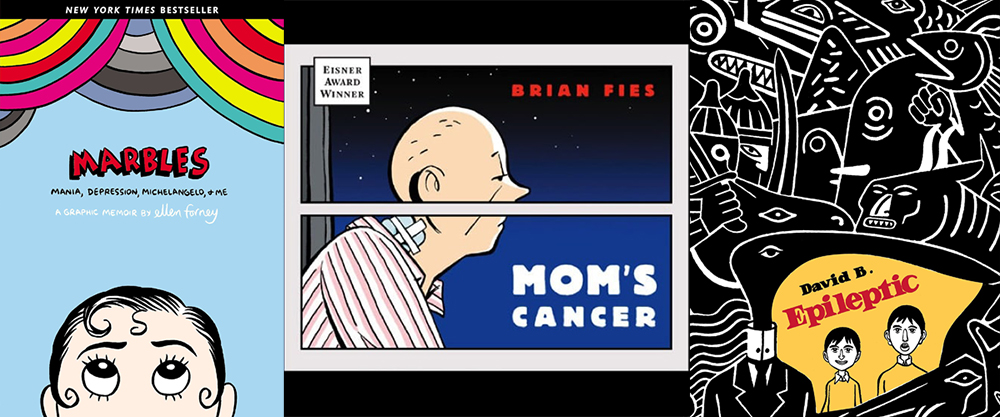
Graphic medicine covers a berth of medical conditions written from various perspectives. Marbles: Mania, Depression, Michelangelo, and Me talks about mental illnesses, Mom’s Cancer delves into a cancer narrative, and Epileptic discusses the stigma of epilepsy.


What is graphic medicine?

Graphic medicine draws its meaning from its two halves: It is the union between graphic novels, and medical education and patient care.

It is a great example of how art reconciles science with humanity, where you don’t merely treat the ailment; you treat the person behind the illness too.

This pandemic is not the first time comics has collaborated with medicine – comics have explored medicine-related topics since the early 1800s!

Despite that, the term “graphic medicine” was only created in 2007 by Dr. Ian Williams. Following this, multiple universities have started including graphic medicine in their curriculum.

Not restricted to factual and informational pieces, these graphic novels often draw upon lived experiences of all parties involved – patients, medical professionals, and caregivers – to offer audiences personal glimpses into perspectives and situations they might not otherwise have.


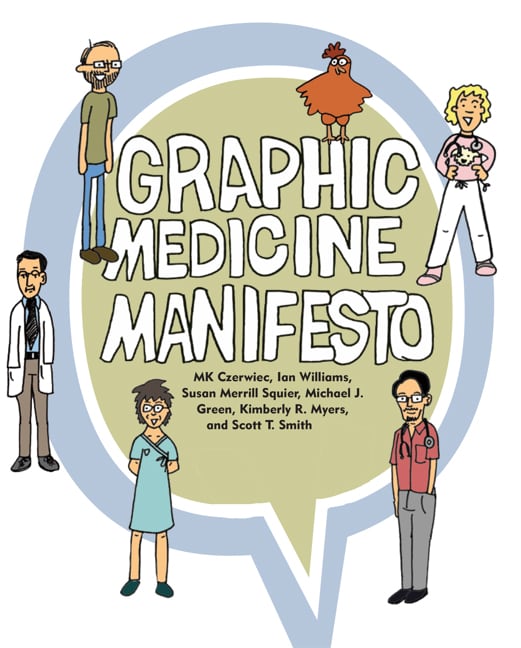
Graphic medicine can help reconnect medical science and illnesses with the people who have those conditions. Graphic Medicine Manifesto serves as a primer for anyone interested in graphic medicine.


Why graphic medicine?

Conventionally, medicine tends to endorse an isolated biomedical approach almost exclusively. Diagnose patients, pinpoint treatments, monitor recovery processes, and send patients on their merry way. Rinse and repeat. The replicability of this cut-and-dried approach makes it highly efficient.

However, today’s practitioners are increasingly aware of how this approach ignores the human and emotional aspects of medicine of patients’ recovery experiences. When you atomise and delineate patients into body systems, it is no surprise that they feel disconnected and less satisfied with the care received.

Pivoting to a human-centric medical approach, graphic medicine reconnects humans with science: medical professionals with patients; pathology with empathy; biology with biography.


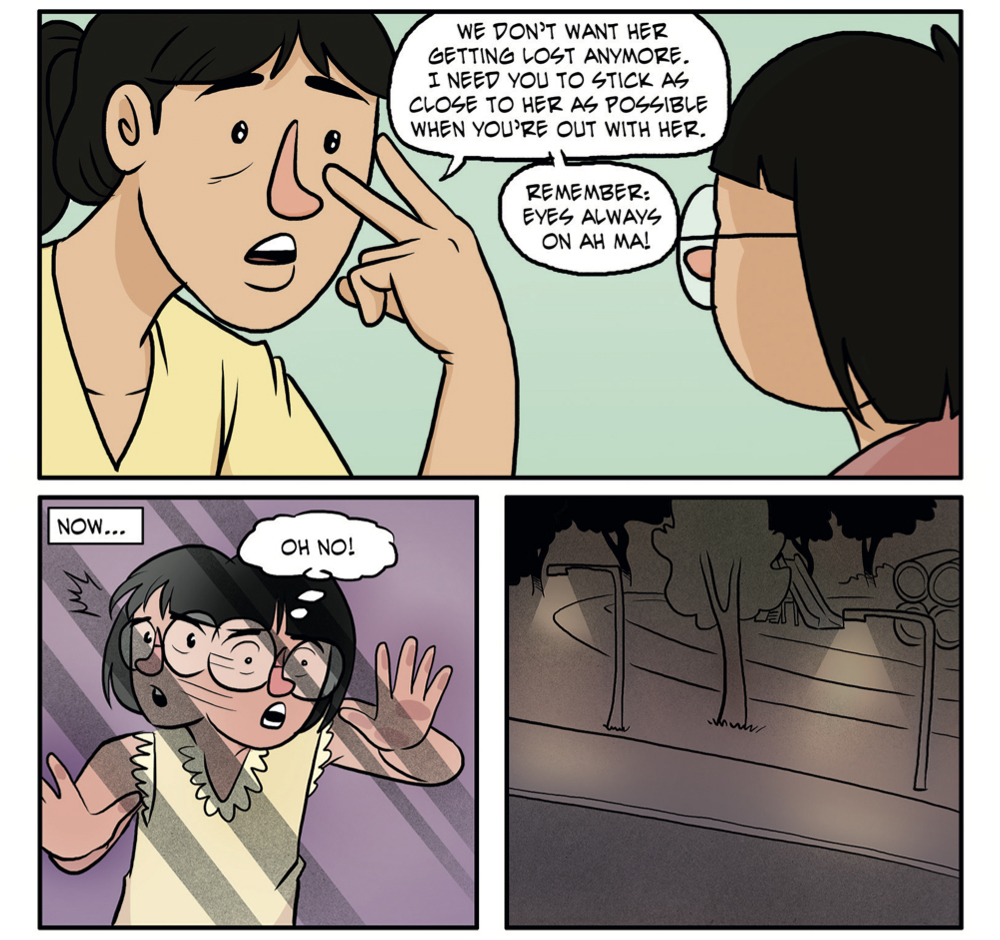
Dementia is the cognitive decline of the brain outside the realm of normal ageing. (Panels from Amazing Ash & Superhero Ah Ma)


What is dementia?

While almost any medical case can benefit from graphic medicine. Two characteristics in particular make a condition a good candidate for graphic medicine: stigmatisation or marginalisation, and a chronic or devastating nature.

Dementia meets both these criteria.

Dementia refers to the cognitive decline of the brain outside the realm of normal ageing. Persons with Dementia (PWD) gradually lose their ability to perform day-to-day activities. Dementia does not refer to a specific condition, and is instead an umbrella term covering specific types of decline, including Alzheimer’s Disease and Vascular Dementia.

As the global ageing population increases, so does the incidence of dementia. In 2018, the WHO reported that there were 50 million people affected by dementia. That’s the equivalent of a person developing dementia every 3 seconds! This explains why there is growing interest in using the arts – including graphic medicine! – to help foster a positive living experience with dementia.


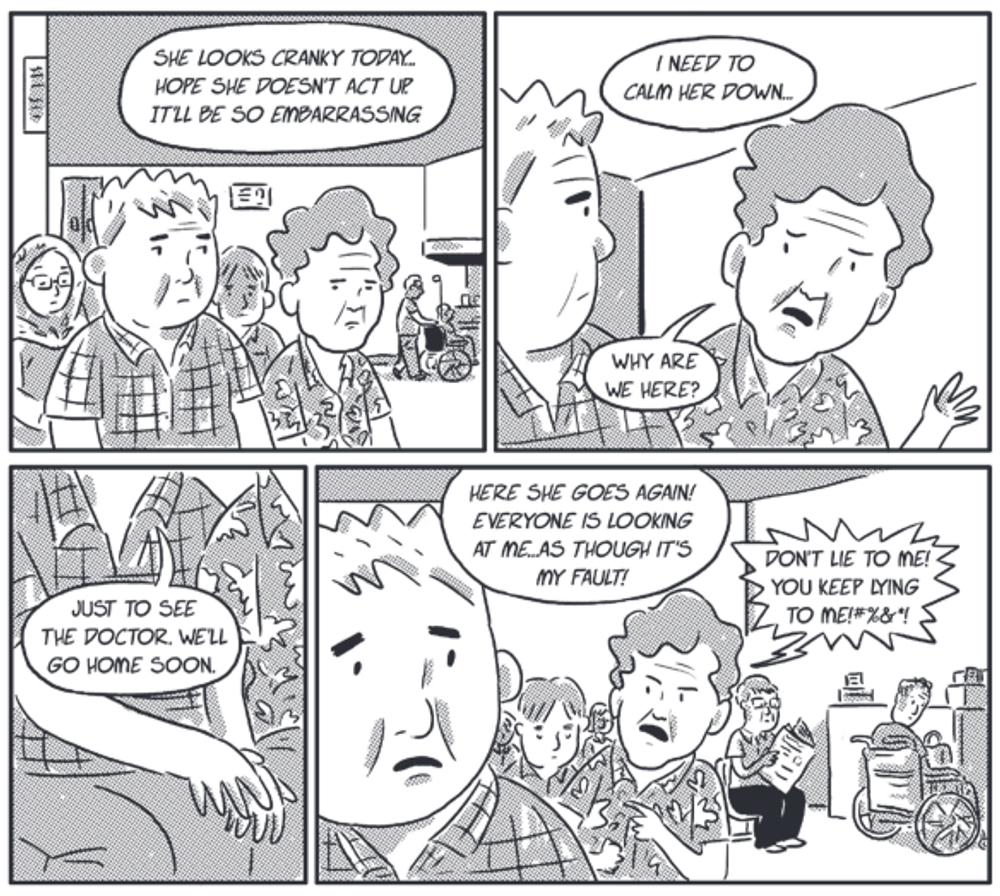
Graphic medicine can help fight against the stigmatisation of dementia by humanising the people behind the condition. (Panels from All That Remains; part of project Forget Us Not)


How does graphic medicine help PWD?

Despite its growing prevalence, and due to its irreversible nature and cumulatively debilitating impact, dementia remains a taboo subject in many places.

One of the biggest barriers PWD face is stigmatisation stemming from a lack of information and understanding of the condition. Dementia is more than just its biomedical dimension – it is indelibly linked to the person experiencing the condition: physically, mentally, and emotionally.

The impact of this stigma is multifold – PWD might be left feeling dehumanised not only by outsiders, but also by some medical professionals. When discrimination underpins social cultures of shame and embarrassment, it can create resistance for people to seek medical attention, even if they are already experiencing symptoms. Moreover, those who support PWD are affected by the stigma as well.

All these make graphic medicine especially pertinent in improving the welfare of PWD and those around them.


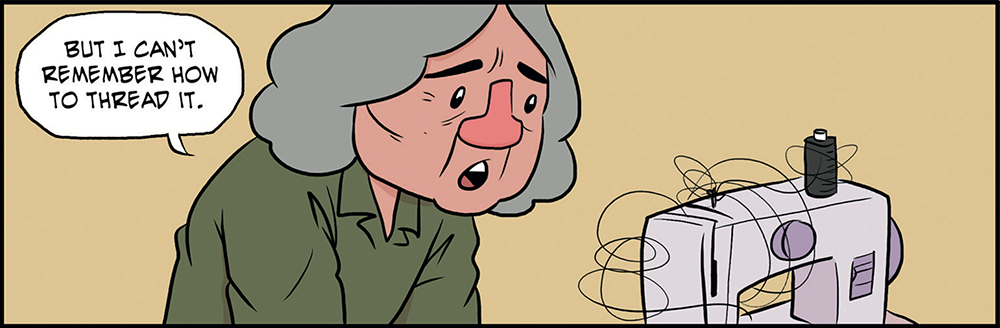
Because of the complex nature of dementia, graphic novels can blend the visual and textual to create layers of subtleties that go beyond the biomedical. (Panels from Amazing Ash & Superhero Ah Ma)


Graphic medicine can address discrimination of PWD not only by providing information on the condition, but also by evoking a human-centred depiction of the medical experience. When readers engage with images of PWD, be it through factual or fictional means, they develop a multifaceted, holistic understanding of the condition beyond the biomedical.

Besides making topics more intellectually approachable, graphic novels offer another form of accessibility – emotional accessibility. By interweaving meaning and context to things typically invisible or difficult to describe in traditional text, emotional perspectives are added back into the equation.

This collective weaving of information – medical, social, cultural, and emotional – builds a living, breathing image of dementia rooted in our everyday lives. The knowledge this is a condition affecting people like us then becomes the foundation – not the exception – upon which new understandings are built.

Moments difficult to inscribe in the harshness of text – including the prejudice PWD face, difficulty in communication, or embarrassment felt when needing help for intimate daily activities – can be coded into the dance of words and images. The relational and temporal aspects of narratives can exist between the spatial and literal. During the reading process, graphic medicine engages the audience, and encourages reflection upon the realities of the characters.


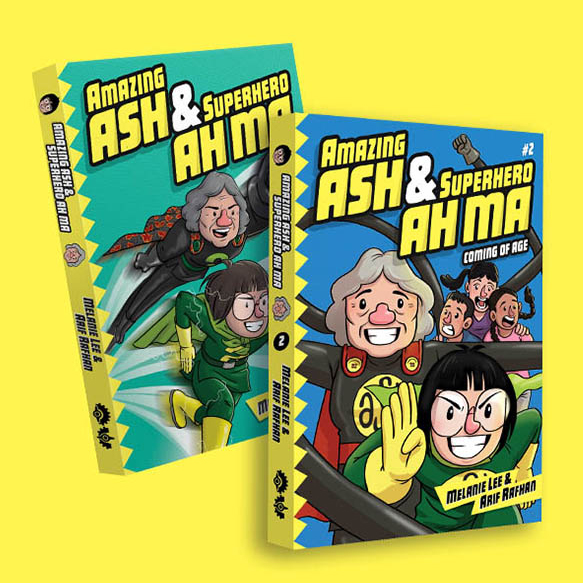
Amazing Ash & Superhero Ah Ma (Books 1 and 2)


We suggest you start your foray into graphic medicine with Amazing Ash & Superhero Ah Ma – an accessible and heartwarming story about how Ash and her grandmother handle the challenges of ageing and dementia while leading an exciting double life as superheroes. Even as Ah Ma’s dementia progresses, she continues to take all her responsibilities seriously – taking care of her neighbourhood, and being a mentor figure to Ash.

The book explores how having a support structure of not merely the immediate family, but a wider social circle as well, can help alleviate some of the stresses of living with dementia. Through the support of her family and the community, Ah Ma is able to continue living comfortably in a familiar environment without hindrance to her well-being or independence. She is still Superhero Ah Ma – dementia is just one of many things she contends with in her day.


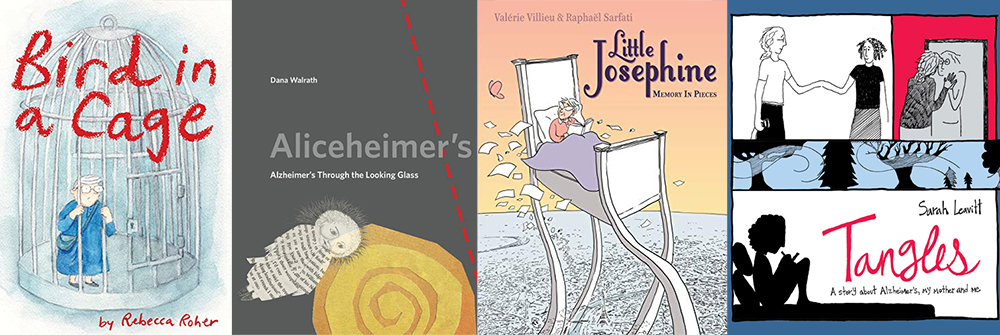
In recent years, graphic novels have become increasingly popular outlets for caregivers to navigate the psychosocial aspects of their responsibilities. Framed through a personal and emotional lens, works such as Bird in a Cage, Aliceheimer’s, Little Josephine: A Memory in Pieces, and Tangles: A Story about Alzheimer’s, My Mother and Me offer outsiders intimate glimpses into the realities of caring for PWD.


Caring for PWD can be a physically and emotionally challenging task: Beyond fatigue from helping with their everyday needs, caregivers need to deal with behavioural changes and the emotional impact of witnessing the deterioration of a loved one’s condition.

Some caregivers turn to writing as a form of catharsis. Dana Walrath’s journey in creating Aliceheimer’s is relatable to many caregivers: It is a healing process, and one that can hopefully be extended to changing wider societal stigma on the narrative of ageing and dementia.

Others lean in to graphic medicine’s ability to educate and inform. Little Josephine: A Memory in Pieces delves into the shared emotional connection between nurse-author Valérie Villieu and her elderly patient Josephine, and reminds fellow medical practitioners of the importance of compassion and empathy in their practice.

Regardless of the perspective, graphic medicine is an invaluable source of information, comfort, and empowerment for many individuals and communities.


More efforts have been made in recent years to amplify the voices of PWD in graphic medicine.


Efforts have also been made to fund projects covering dementia from the perspective of PWD. While stories by caregivers remain essential in creating public awareness and empathy, there is still a gap in understanding of how those who with the condition wish to be portrayed.

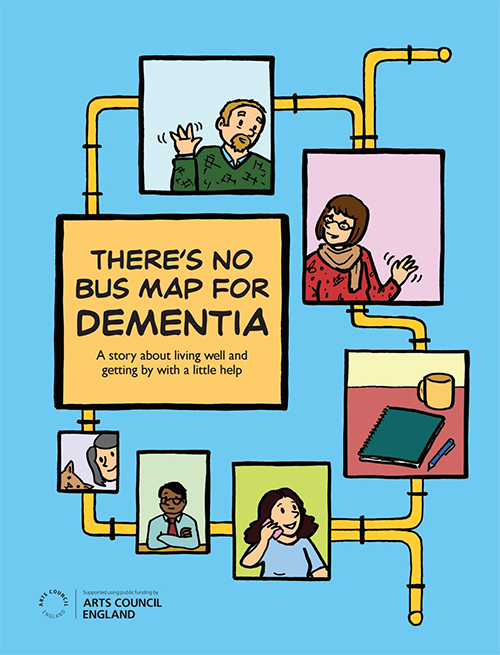
Working with a group of PWD, the Beth Johnson Foundation created There’s No Bus Map for Dementia, a graphic novel that focuses on the daily realities of living with dementia. More importantly, instead of relegating the voices of PWD to the background, this work amplifies the voices of those with the condition. The result is a tale of joy and hope; friendship and independence.

Over time, the project hopes more works of similar nature can be produced, and more stories of dementia can be told in the way PWD want: with respect, and as people with agency.


Graphic medicine resources

For a comprehensive list of other graphic novels and more information on graphic medicine, visit the Graphic Medicine International Collective. We have also handpicked some other reference sources for your foray into graphic medicine!

https://www.nlm.nih.gov/exhibition/graphicmedicine/index.html

https://www.statnews.com/2018/04/26/using-comics-in-medicine/

Immerse yourself in magic, mayhem & more in these new Southeast Asian comics in 2022 & 2023!

As we embrace what 2022 has to offer to us, the Difference Engine team is proud to announce three original graphic novels and two DE Shorts that will be published this year, along with new and exciting projects for 2023! 

As part of the Potato Productions family, our team believes in being creative, doing good, and last but not least, having fun! 

This is why one of our core values is to publish stories our readers can relate to and see themselves represented in. Our comics, for adults and children alike, are written and illustrated by Southeast Asian creators who offer unique and personal perspectives on a variety of topics that are close to their hearts. We hope you’ll find a story that speaks to you. 


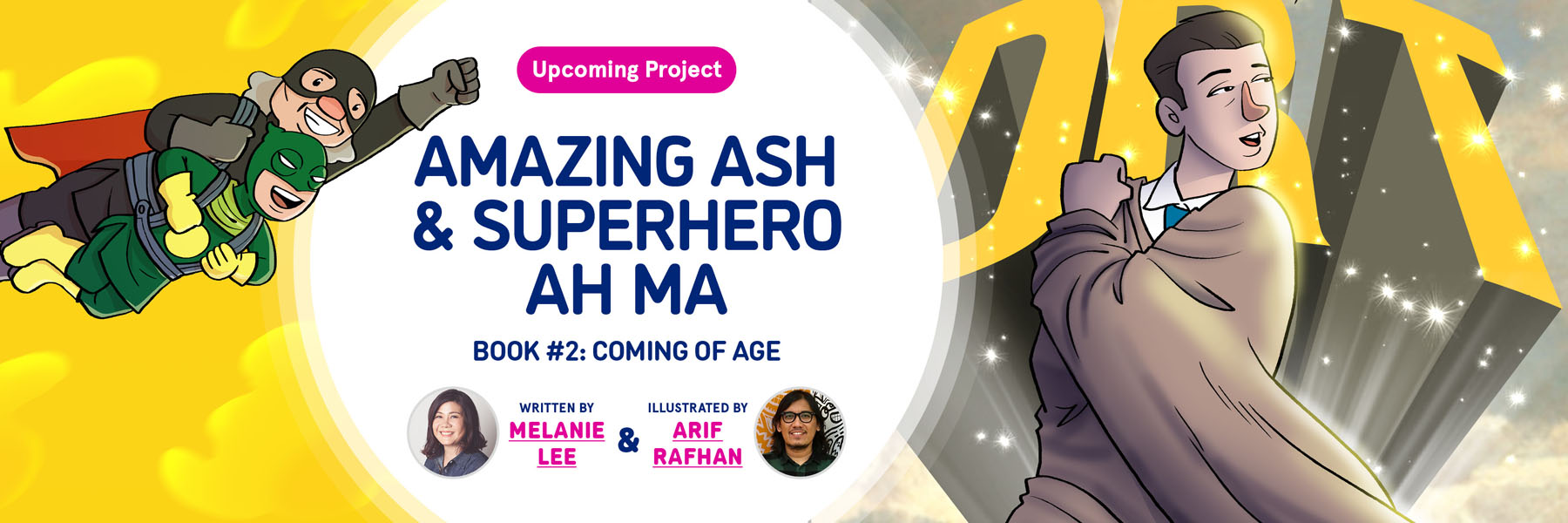
Upcoming Project for Amazing Ash and Superhero Ah Ma

AMAZING ASH & SUPERHERO AH MA (BOOK #2): COMING OF AGE 

By Melanie Lee and Arif Rafhan 

Category: Children’s Fiction
Theme: Family, Superhero, Dementia
Publication: May 2022 

Synopsis:

The adventures of Amazing Ash & Superhero Ah Ma continue! As Team ASH grows in number, Ash juggles being a responsible superhero, a supportive grandchild and a kind friend. Meanwhile, is Ah Ma’s dementia getting worse? How will the team cope with a new nemesis and the strange developments happening in town? Join Ash, Ah Ma, and the rest of Team ASH as they try to save the neighbourhood and, at the same time, face the changes that come with growing up and growing old.

Watch out for the conclusion to the Amazing Ash & Superhero Ah Ma trilogy in 2023!

Book #1 is available in print and ebook format here.

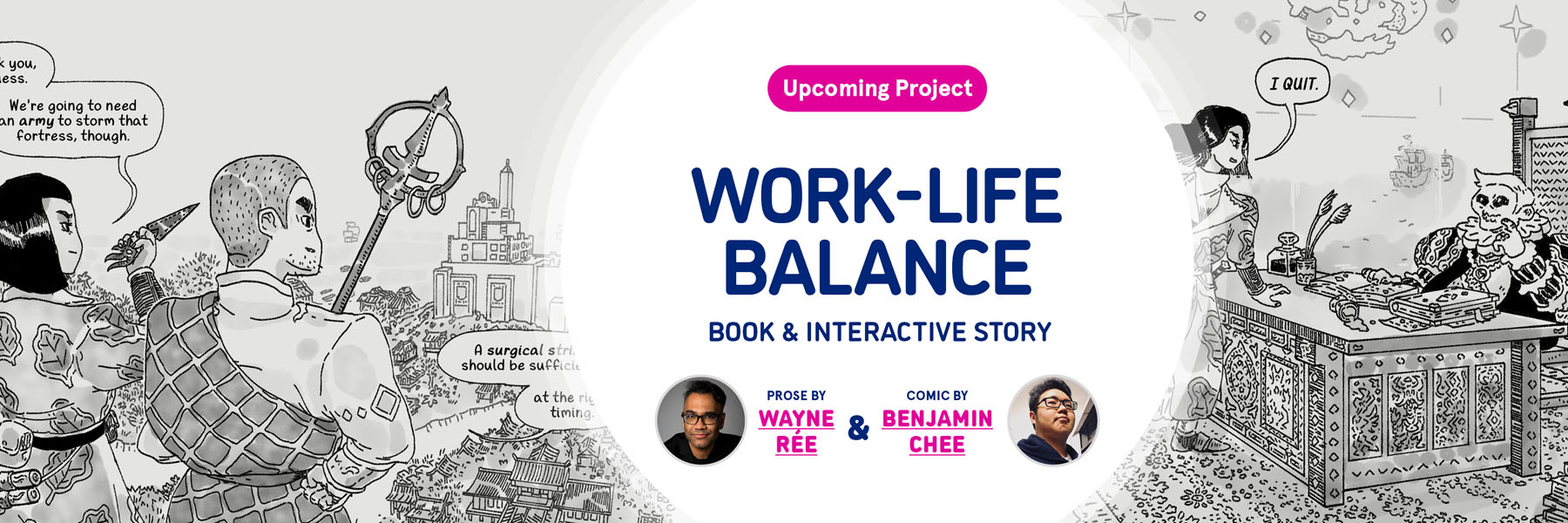
 Upcoming Project for Work Life Balance

WORK-LIFE BALANCE (BOOK & INTERACTIVE STORY) 

By Wayne Rée and Benjamin Chee

Category: Adult Fiction
Theme: Supernatural, Work
Publication: Oct 2022

Synopsis:

WORK-LIFE BALANCE (Book) 

When a malevolent multinational arrives on our shores, familiar creatures like pontianaks, manananggals, rākṣasīs and ba jiao guis are forced out of their jobs. Some give in and sign up for mundane corporate life – but others would rather fight than join the broken-spirited hordes of the (desk)bound.  

Wayne Rée’s prose and Benjamin Chee’s comics intertwine in this collection to bring you familiar Asian mythology in an even more familiar setting: the realm of dead-end work, glass ceilings, and truly hellish bosses.

INTERNAL DAMNATION: PICK YOUR HELL (Interactive Story) 

Along with the graphic novel, readers can also look forward to a short web browser game, Internal Damnation: Pick Your Hell.

In partnership with developers Lionfish Studios and audio studio Imba Interactive, creators Wayne Rée and Benjamin Chee bring you a hilarious and/or harrowing interactive text game where you play as an intern in the hellish corporation known only as The Company.

Impress your supervisors by fetching coffee, crafting SEO-friendly social media posts and slogging through your average internship tasks. Just try not to get killed! (Oh, and a little word of warning: never trust your colleagues – especially the demons.)

Drawing from the world of Work-Life Balance, Internal Damnation: Pick Your Hell features stunning isometric diorama illustrations and ambient music that bring this standalone story to life.


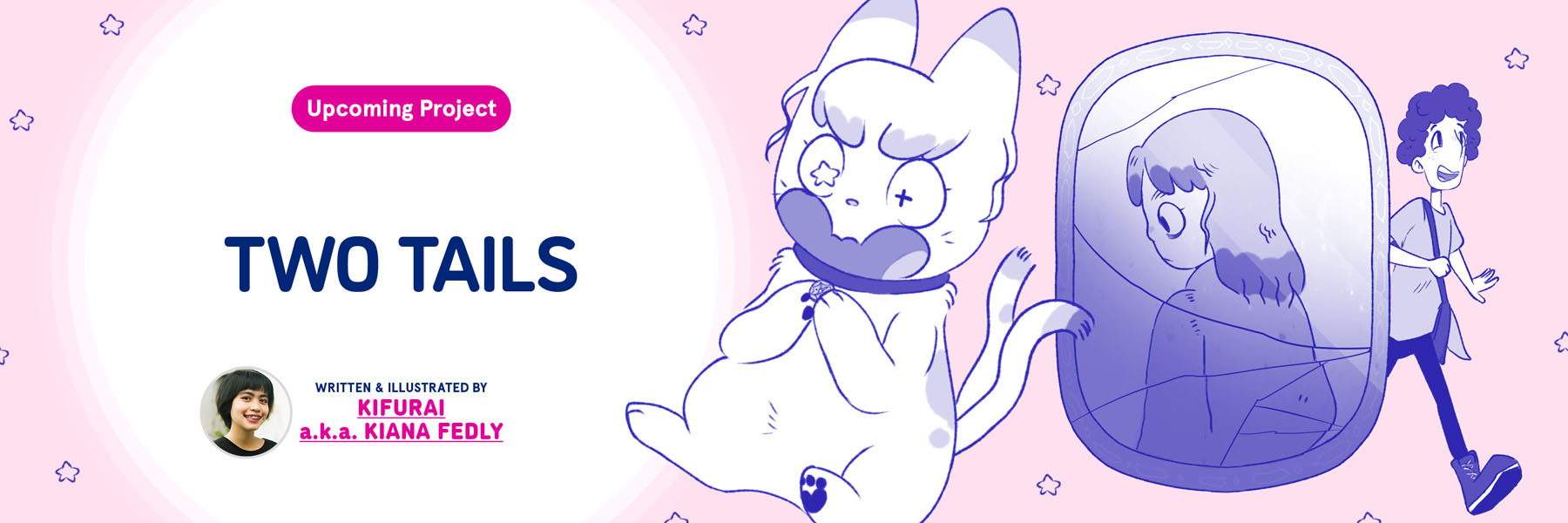
Upcoming project for Two Tails

TWO TAILS 

By Kifurai a.k.a. Kiana Fedly

Category: Young Adult Fiction
Theme: Fantasy, Animals
Publication: 2023

Synopsis:

Sophomore student Rara detests animals. And she absolutely hates cats. Until one fateful night when a fatal bike accident changes everything… 

A second chance at life beckons, but there’s a catch: She has to get her body back. The bigger catch? She’s now a cat. 

Armed with two tails and with a long lost friend by her side, Rara ventures on a whimsical journey to show us the very human nature of animals, and the immense space that we carry in our hearts for reconciliation. 


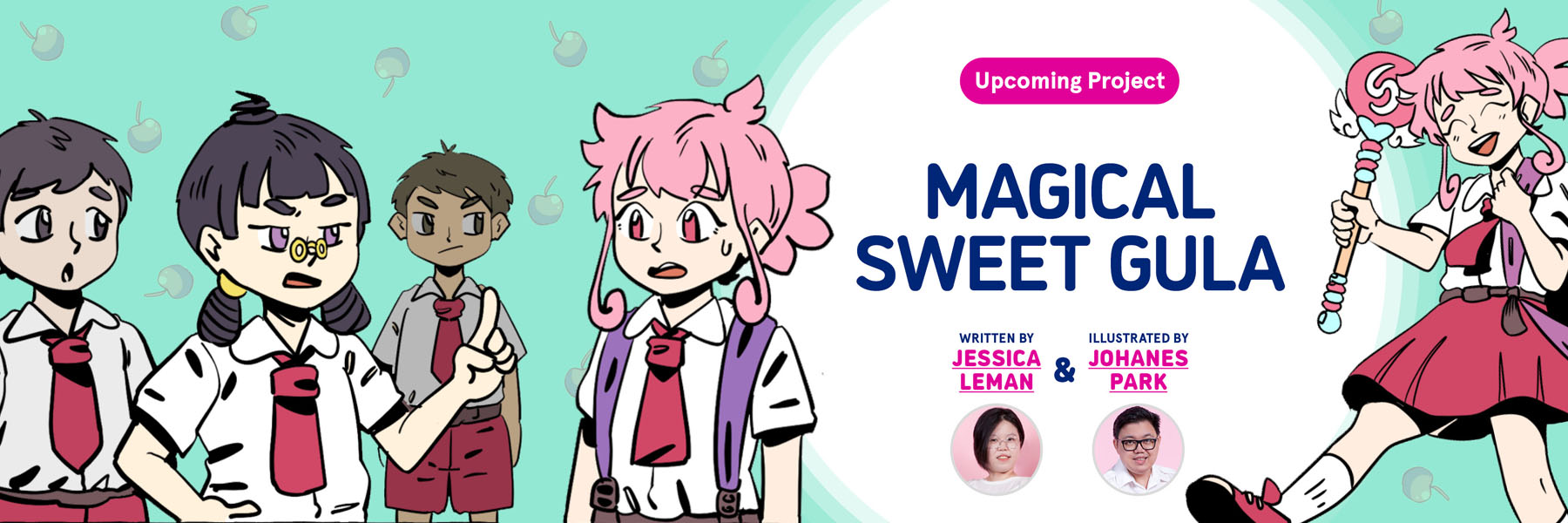
Upcoming Project for Magical Sweet Gula

MAGICAL SWEET GULA 

By Johanes Park and Jessica Leman

Category: Children’s Fiction
Theme: Fantasy, School, Friendship
Publication: 2023

Synopsis:

Gula Gulali is a young Magi who has the delightful power of turning the things around her into cakes and sweets! She lives in the city of Manakarta in the realm of Terra, where the non-magical people don’t think too highly of Magis. With her bright pink hair and pointed ears, Gula sticks out like a sore thumb in the regular school she attends.

When another young Magi joins Gula’s school, his obsession with Terran culture annoys her to no end. Not to mention, his weird behaviour is bringing far too much attention to the Magi who are already facing prejudice from Terrans. Now, Gula has to navigate friendships, slander, and a series of magical mishaps — all while the success of a school drama production is at stake!

Will she find acceptance and belonging, or will she have to give up her magic to fit in?

This graphic novel is the first book of a multi-part series.


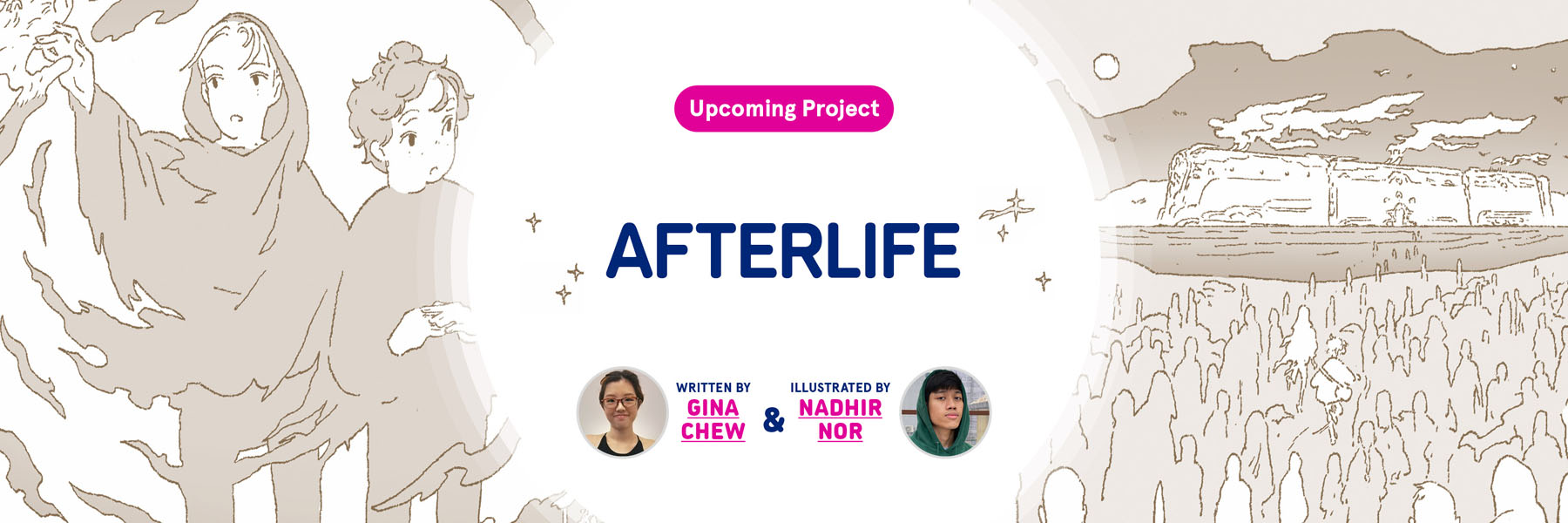
Upcoming Project for Afterlife

AFTERLIFE

By Gina Chew and Nadhir Nor 

Category: Young Adult Fiction
Theme: Fantasy, Romance
Publication: 2023

Synopsis:

Kyra’s younger brother lays on his deathbed and she’s stricken with grief. Spirit Keeper Eric was just there to do his job and bring a Soul into the Afterlife. So why do they feel an inexplicable connection when they meet?

In this great expanse where what’s lost is found, fate, memories, and love intertwine as Kyra and Eric embark on a daring rescue mission to save a little boy from Death’s clutches. Afterlife is an epic Southeast Asian-inspired young adult fantasy graphic novel about one girl’s sacrifice as she fights to save what she loves, without losing herself in the midst of it all…


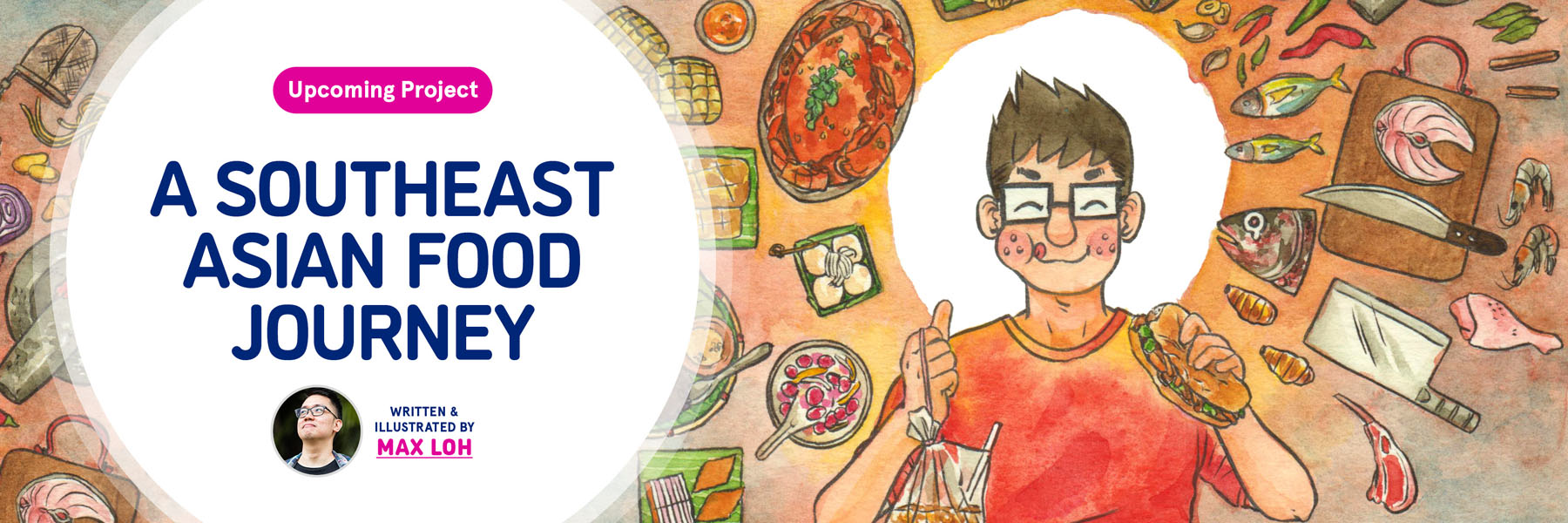
Upcoming Project for A Southeast Asian Food Journey

A SOUTHEAST ASIAN FOOD JOURNEY 

By Max Loh

Category: Adult Non-Fiction
Theme: Food, Culture
Publication: 2023

Synopsis:

Some might say that food is the heart of Southeast Asia. 

The region’s multitude of cuisines is a colourful reflection of the many cultures that have made home in the land. In this flavourful graphic novel, cartoonist and foodie Max Loh delves into the importance of food in the region, its celebration of traditional dishes along with the evolution of others, and the stories of people whose lives are interwoven with our favourite foods. 

Dishing out factual observations on food, culture, and heritage, paired with personal experiences from Max Loh, this book serves up an accessible read of Southeast Asia’s complex relationship with food for the gastronomer or casual food lover alike.


DE Shorts  

Difference Engine is also adding two stories to our latest imprint, DE Shorts, which publishes self-contained stories on a wide range of social issues. With DE Shorts, we aim to publish stories of lived and shared experiences – we hope that it will be a starting point for openness and candid discussion. 


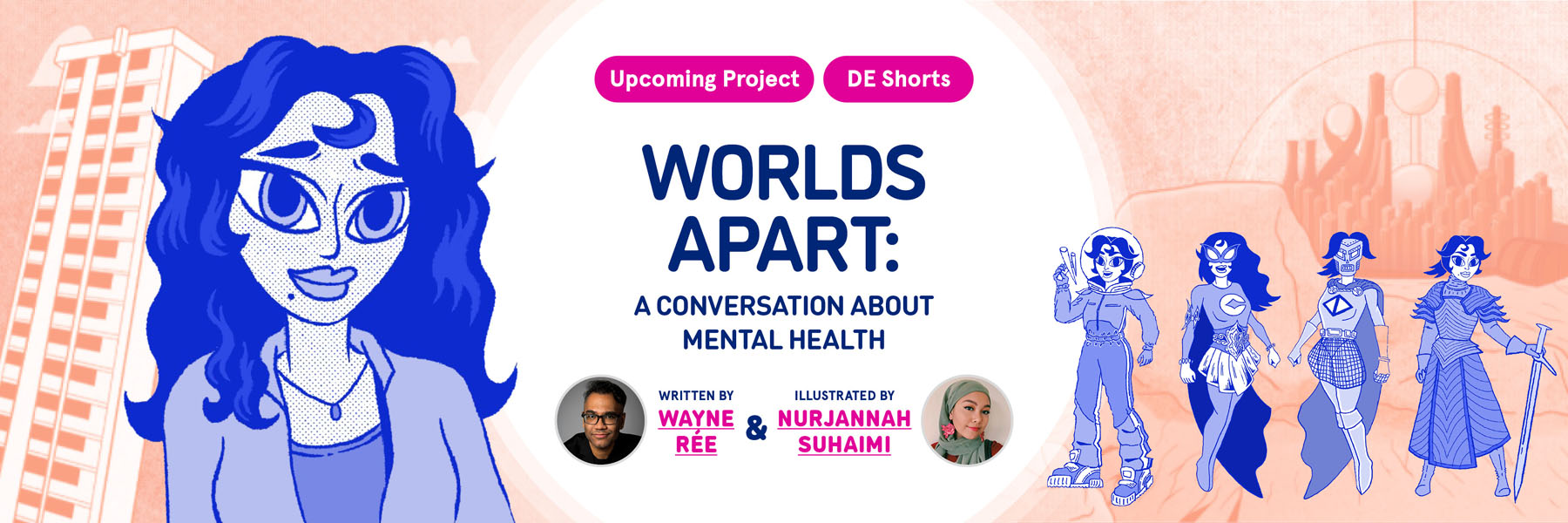
Upcoming Project for Worlds Apart

WORLDS APART: A CONVERSATION ABOUT MENTAL HEALTH 

By Wayne Rée and Nurjannah Suhaimi 

Category: Adult Non-Fiction
Theme: Mental health, Self-help
Publication: Apr 2022 

Synopsis: 

It’s been a while since you caught up with Charissa. You finally – finally! – find the time to meet for coffee, but after the usual pleasantries, she opens up to you.

She’s been diagnosed with depression. A moment like this can feel like a fork in the road. Will it lead to an emotionally rewarding conversation or… cause a lot of confusion and awkwardness?

Many of us still largely choose not to talk about mental health – and that often breeds misconceptions and social stigma. Join Charissa as she guides you through these unfamiliar territories and terrains that can be difficult to navigate.

Let the conversation begin.


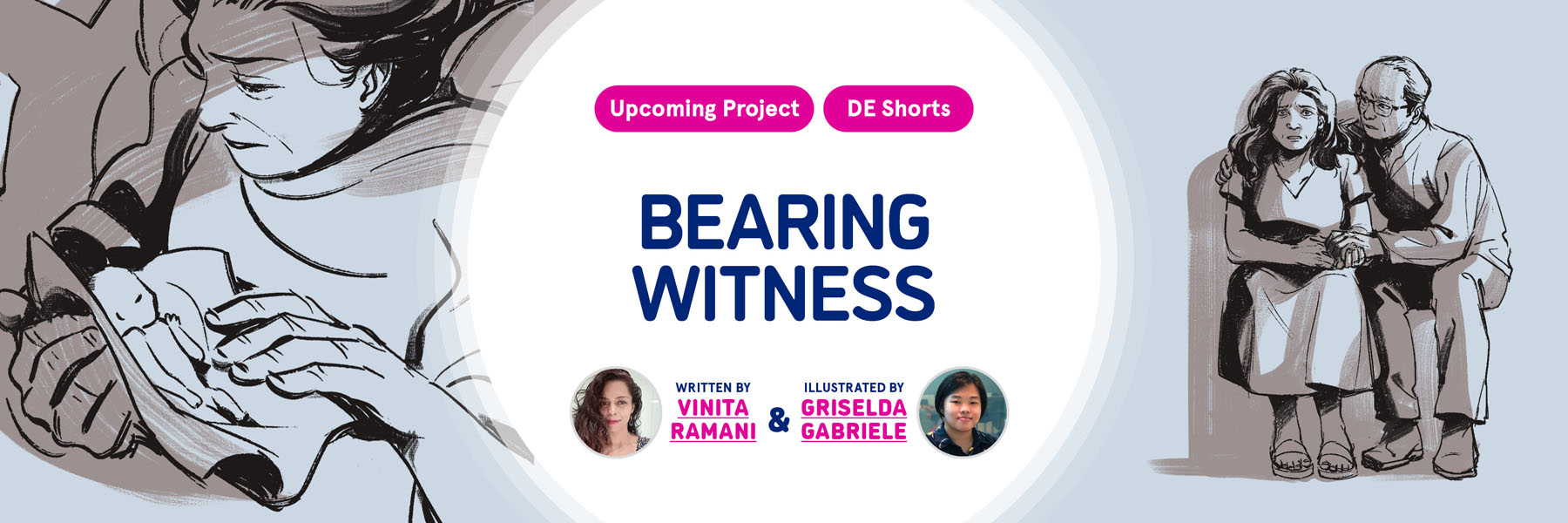
Upcoming Project for Bearing Witness

BEARING WITNESS 

By Vinita Ramani and Griselda Gabriele 

Category: Adult Non-Fiction
Theme: Pregnancy, Family, Autobiography
Publication: Nov 2022

Synopsis:

Suffering from postpartum depression after the birth of her first child, a 42-year-old musters up the courage to try for another baby. Two trimesters of nausea, exhaustion, and recurrent, intense dreams pass, only for her to discover that her baby has passed away in the womb. 

And so begins a surreal life on the other side of loss, where grief and ecstasy are often bedfellows, tears come from nowhere, other people’s babies become the objects of intense affection, and where the baby that never came to be, shows up in stars, stones, seeds and her toddler’s imagination.


Creator Bios 

Melanie Lee is the author of the picture book series The Adventures of Squirky the Alien, which picked up the Crystal Kite Award (Middle East/India/Asia division) in 2016. She is also an Associate Faculty at the Singapore University of Social Sciences developing and teaching media writing courses.

Arif Rafhan is a comic and pre-production artist. His work has been published in more than 10 books to date by MPH, Buku Fixi, Maple Comics, and Marshall Cavendish. He also works with various production companies creating pre-production visuals such as concept art, character designs, environment designs, and storyboards.

Wayne Rée is the co-creator of the upcoming prose/comics mash-up, Work-Life Balance, and the short comic about mental health, The Conversation, as well as the author of the short story collection, Tales From A Tiny Room. His work’s been included in several fiction publications, most notably Infinite Worlds Magazine and LONTAR: The Journal of Southeast Asian Speculative Fiction. He is also the co-creator of the narrative podcast, Ghost Maps.

Benjamin Chee is a game artist by day, and a comic creator by night. He is the creator of Charsiew Space, a story about smugglers in spaceships cooking forbidden pork. He has also published 6 other titles, and has contributed to multiple anthologies including LONTAR Issue #5, Liquid City Vol. 3, Asian Monsters, and SOUND: A Comics Anthology

Kifurai a.k.a. Kiana Fedly is an illustrator and full-time animal lover. She comes from a family in the creative field and went on to study at Jakarta Institute of Arts (IKJ). With a background in illustration, she spent four years freelancing for creative agencies and various clients such as musicians, F&B businesses and startups, storyboarding, creating and illustrating cute characters for mascots and digital content.

Johanes Park and Jessica Leman are an artist-writer couple. They met while pursuing their bachelor degrees, and later received their BA in Digital Animation from Kyungsung University, South Korea. In 2021, Johanes received his Master of Art degree from Jakarta Institute of Art while Jessica received her Master of Management degree from Prasetiya Mulya University. They reside in Jakarta, Indonesia, where Johanes works full-time as a lecturer in a private university, and occasionally teaches basic drawing for children on the weekends.

Gina Chew is a Singaporean writer most acclaimed for her debut play Permanence. An English Literature graduate from the National University of Singapore, she brings her interest in theatre and its myriad of stories-come-to-life to other mediums including film, television and online media such as videos and animated stories.

Nadhir Nor is a Malaysian artist based in Selangor with an interest in all things otherworldly. He believes that the magic of finding the otherworldly in the mundane, and vice versa, makes for a story worth telling, and uses his works to explore the relationships between mythology and ancient cultures with modern society.

Max Loh is an as-and-when comic artist who’s still navigating the ideal middle ground between practicality and passion. When he isn’t drawing, he tries his best to slowly eat his way through the world, despite international travel and dining out being a rare treat nowadays.

Nurjannah Suhaimi is a designer based in Singapore. She is a visual communications graduate from Nanyang Technological University, the School of Art, Design, Media. As a self-motivated and proactive person, she takes pride in being able to adapt in stressful situations, and is always seeking new experiences to keep her on her toes! 

Vinita Ramani is a writer and editor. She has previously worked as a journalist for various local and regional publications, and as a publicist for film festivals both in Singapore and abroad. 

Griselda Gabriele is a Singapore-based Indonesian artist with experience in editorial illustration and visual development for games and animation. She’s passionate about storytelling, with a special interest in exploring the diverse history, (pop) culture, and faith of Indonesia and Southeast Asia.

**Titles and illustrations are not final.

For updates on these titles and more, sign up for our e-newsletter.

If you have a story you’d like to tell, head here to find out more details on submitting your pitch or manuscript to us. We’d love to hear from you!

7 Qualities That Make a Great Mentor

Mentors are a vital part of personal and educational development. A mentor could be anyone: a parent, a maths tutor, an art teacher, a librarian, or even a volunteer at school. They are not just enthusiasts or professionals in their field, but also enjoy sharing their expertise and know-how, and are passionate and truly care about their students’ growth.

Remember Miss Tilly Tay from The Makers Club graphic novel series? She’s a great mentor character in the books that offers support and guidance to the students in the Makers Club! A mentor can spark a sense of excitement and the joy of discovery in a student. They make learning a safe space – one that allows for mistakes and failure, and one that encourages creativity, exploring new ideas and concepts, and creates an even playing field.

Now, you may wonder, what actually goes into making a good mentor? Here are seven integral qualities that a great mentor – like Miss Tilly – encompasses!


Inspiring students through sharing experiences and expertise

While knowledge, experience, and expertise are assets any mentor may have, the willingness and desire to impart the information, and to pay it forward, takes mentorship to another level. Good mentors are willing to share not only the best parts of their experiences, but also their failures. Both sides of the coin provide valuable opportunities for learning and can help mentees on their own paths.

The best mentors are curious learners themselves! They have the willingness to learn and grow, which makes mentorship a two-way street. Miss Tilly from The Makers Club series is the Head Librarian at Pangolin Secondary school, but she is open to more than just her responsibilities at the library. She makes DIY knick knacks, encourages students to create, and also created a Maker’s Lab where students can explore different skills and try their hand at building things.


Providing empathic guidance

Mentors need to be able to commit to their mentees, but more importantly, they need to be available to them. Mentoring requires time and effort; emotions and space. Sometimes, this includes an investment in your mentees’ lives – school, and sometimes personal.

We can think of mentors as a compass that guides on uncertain paths, and a lighthouse that beckons a reprieve when the waves prove too challenging. Great mentors listen to their students or mentees actively, asking them open-ended questions, share their personal experiences, and providing them with valuable feedback and encouragement. The advice is meant to offer guidance, but not stifle self-discovery from their wards.

As mentors and mentees share personal stories, they build trust and empathy with each other. Such sharing humanises their interactions beyond the textbook and superficial. Oftentimes, this leads to a transparent mentor-mentee relationship, which allows both parties to grow in their respective journeys.


Open communication is key

Great mentors communicate effectively to suit the personality style of their mentee. While one student may prefer a more hands-off approach, another might benefit from a little guidance. A good mentor also provides mentees with relevant challenges that can aid in their development – creatively or academically – and foster the feeling of accomplishment in their respective fields.

Mentors also provide constructive feedback to their students, and are willing to debate and discuss in a tactful manner. Giving useful, honest guidance helps mentees take charge of their potential and make their own decisions, as well as have their thoughts, opinions and feedback heard. This helps not only students in building confidence, but also mentors in guiding their mentees better on the route they wish to take.

Alongside being honest, giving constructive criticism, and providing guidance, a big part of investing in a mentee includes giving encouragement. While this delicate balance can be a challenge to achieve, great mentors support their mentees, and let them know when they’re doing a great job.


Realising and uncovering potential

Mentors not only work hard to realise the potential of their mentees, but also try to understand why they look at things the way they do. Picture two students. One loves designing items, and they are pretty certain that they want to create a spectacular piece of clothing in the near future. The other student doesn’t know much about design creation, but they want to try their hand at it – without any strings attached.

A mentor would keep an open mind and provide both these students with the same opportunity for exploration, and trial and error – even if one or both of them might choose not to pursue the craft. Why is one student so passionate about designing? Why is the other curious about it? Helping a mentee understand their perspective can help them better understand themselves and their potential. This safe space allows students to experience skills that they are curious about, without the obligation to stick with something they might not enjoy in the long run.

While Miss Tilly knows that Aqi is more invested in crafting than Yong Qiang, she gives them both the opportunity to work with the different machines in the Maker’s Lab, and provides them with the necessary guidance along the way.

As such, mentors don’t only want students to be the best version of themselves, they also want them to explore greater heights and master the skills that they already have – keeping in mind that not every student will choose to stick to the same path as another.


Going the extra mile

Who would you consider the most impactful mentor figure in your life? Perhaps it was your form teacher who constantly checked in on you, or maybe it was your activity club’s teacher-in-charge with whom you had an innate rapport with. Regardless of whichever it may be, the mentor figures who leave the biggest impression on us tend to be those who take pride in their responsibilities as a mentor, and go the extra mile for their mentees.

Mentors are eager to invest in their mentees as a person, extending beyond their academic and creative pursuits, to include discussions about behaviour, values, and relationships. They get to know their mentees and take an interest in their personal lives, providing them with confidence beyond the curriculum.

Just like Miss Tilly from The Makers Club series, this group of mentors do not shy away from helping mentees outside their predetermined scopes. Although Miss Tilly is a librarian, instead of just pinpointing Nadia and Priya to suggested reading materials on game design and coding, she volunteers her own programming knowledge to help the pair with their science project.

Even though coaching and tutoring came out of her own hours, Miss Tilly continues to help because she is invested in not only the short-term goal of completing their science project – she is invested in Nadia and Priya’s long-term growth as makers.

Mentors don’t view lessons or coaching sessions as a chore – great mentors are positive and enthusiastic about their subject matter and they view the engagement of students as a privilege.


Creating external support structures

While learning and self-discovery are inward looking processes, they should not be done in isolation. Having a mentor by one’s side can give the mentee support and courage in new endeavours, but the mentor alone should not constitute the entirety of the mentee’s support structure.

As the mentee continues forth on their journey, a good mentor can start providing access to external groups or individuals from whom the mentee can learn from. Having others around on similar journeys or those who are subject matter experts can offer the mentee new perspectives.

In the case of Pangolin Secondary School, even though students may express interest in making and maker education but no formal channels for those exist. To bridge the knowledge gap, Miss Tilly founded the Makers Club along with Aqilah and Yong Qiang, and invited the rest of the school population to join. Thereafter, makers who wish to explore techniques and methods can consult not just Miss Tilly, but each other as well.

This creates a positive feedback loop of learning and refining that is centred upon the individual mentee – and one that can be brought to any environment with or without the mentor’s presence.


Finding their place in the classroom… and the world

Mentoring does not stop when the specific task your mentee requires help on is complete. What separates a good mentor from a great one is what happens after: How will you help your mentee redefine their goals and vision to ready them for the next step of their journey?

Traditional curriculum is set along a set of predefined railroad tracks. Marked by chapters, assignments, and exams, students are passengers on a course with little autonomy. When no longer bound by the perimeters of the traditional classroom, students may find themselves at a loss as to how they can map their academic goals to the wider world.

Mentors can therefore serve as an anchor to the wider world for their mentees, grounding their classroom activities into real world terms. Like how Miss Tilly encourages Aqilah to explore her interest in design and craft, by taking careful note of what each mentee exhibits interest and proficiency in, mentors can gradually provide opportunities for their wards to explore and discover adjacent skills and competencies. This does not mean that mentors need to have all the answers either – it is a journey of discovery for both parties.

Over time, each mentee will be able to leave their classrooms equipped not just with academic credentials, but also a road map to a greater adventure shaped by their own two hands.


To see how Miss Tilly mentors the Makers Club quartet, check out The Makers Club: Starting Up! here. Now available in print and ebook formats!

Amazing Ash & Superhero Ah Ma: The Unforgettable Adventures

The past couple of months have been ash-citing for superheroes Amazing Ash and Superhero Ah Ma! After their adventure in the first instalment of Amazing Ash & Superhero Ah Ma, the dynamic duo have officially taken up the mantle as their community’s friendly neighbourhood superheroes. However, to ensure that Ash and Ah Ma can continue doing good includes caring not just for their community, but also looking out for Ah Ma as her dementia worsens. Ash, Ah Ma, Grace, Zoe, and Buddy find themselves on a new series of unforgettable adventures around Singapore – this time to learn more about dementia and caring for elderly loved ones!


Follow the group on their unforgettable adventures by reading the bite-sized comics


All ten bite-sized comics can be viewed and downloaded for free on the microsite!


Similar to the original graphic novel, these unforgettable adventures interweave the heartfelt with the light-hearted, and the factual with the emotional. This collection of ten fully coloured bite-sized comics can be viewed and downloaded for free on the mini-series’ official microsite, where the group find themselves exploring the newest design features and developments that help people with dementia in Singapore.

Readers of all ages are invited to follow the characters alongside their journey, regardless of prior knowledge of dementia. These comics can serve as educational resources on the condition – the curious will be introduced to the basics of dementia, learn simple ways to make loved ones with dementia feel more comfortable and included, and discover places to visit with loved ones.


Each comic comes with additional information and discussion questions


These excerpts include clarification on concepts and terms used in the comic, and may include additional information and external resources that help young readers better understand key concepts and topics.


To further expand on the topics and concepts mentioned, each comic comes with its own informational excerpt, and a couple of discussion questions. Created for children to learn more about dementia, people with dementia, and their caregivers, these sections are meant to further inspire interest and conversation on each topic. By following Ash and Ah Ma during their more candid and vulnerable moments, younger visitors – who might not have much exposure to the concept of ageing and dementia – are given the opportunity to glimpse a perspective they may not otherwise be privy to.


Creators used reputable sources from dementia organisations and government-linked sources in their research


These are some of the image references used by Melanie and Arif to create the bite-sized comics. (Top-left: Mid-Rise Urban Living by Chris Johnson; bottom: GreatNewPlaces)


To prepare for Ash and Ah Ma’s unforgettable adventures, creators of Amazing Ash & Superhero Ah Ma, Melanie Lee and Arif Rafhan, embarked on their own journey to better understand the condition, and what Singapore is currently doing to help build conducive spaces for people with dementia.

During their research, both creators read up on dementia to better familiarise themselves with the symptoms and experiences of those living with it. To create as immersive and accurate an experience as possible, Melanie and Arif used information vetted by local dementia and government organisations, and official reference photos for the locations mentioned.


Here are some photos Melanie took during her day trip to AWWA’s Yishun Dementia Day Care Centre.


Melanie even took a day trip – with Felicia and Sophia from the Difference Engine team – to AWWA’s Yishun Dementia Day Care Centre during her research for “Comic #9: Dementia Day Care”! Nicodemus from AWWA graciously gave everyone a tour of the location, and explained why certain activities and fixtures were included in the centre for the benefit of the clients. It was ah-ma-zing!


Put your knowledge to the test by helping Ah Ma build her cosy corner

But the journey doesn’t end after viewing all ten bite-sized comics! After learning about dementia, children can apply the knowledge they have gained from the comics into one of the multiple activities available.


What items will you choose to put in Ah Ma’s cosy corner?


Younger visitors can help design a cosy corner for Ah Ma either digitally on the microsite, or by downloading the activity sheet from the digital goodies pack below. Inspired by Hackcare.sg, the cosy corner is a modular and DIY set that creates an anchor space for commonly-used and comfort items that a person with dementia may need.

Children can infer Ah Ma’s needs from the ten bite-sized comics above, as well as her adventures in Amazing Ash & Superhero Ah Ma, and build a cosy corner that is both useful and conducive for her. There is no correct answer – empathise, be creative, and have fun!

Psst, don’t forget to share your children’s or students’ iterations of their cosy corner on social media by using either the #superheroahma or #ahmacosycorner hashtags!


Continue on your learning journey by downloading the free digital goodies pack


Download and print these downloadables to continue on your learning journey!


Besides the interactive on-site elements, all visitors to the microsite get free access to a digital pack filled with a host of goodies. The pack includes all ten bite-sized comics for easy viewing whenever and wherever, a Draw Your Own Comic! template for the budding creative, a printable version of Ah Ma’s Cosy Corner among other Amazing Ash & Superhero Ah Ma themed activities and freebies. The super-fun has only just begun!


Stay updated on Ash and Ah Ma’s adventures


The anticipated next instalment of Amazing Ash & Superhero Ah Ma is set to be released in 2022. In the meantime, catch up on the adventure thus far here!


If you would like to know more about Amazing Ash & Superhero Ah Ma or the microsite, or would like to request a workshop on writing, storytelling, or comic creation from the creators, you can reach us at readcomics@differenceengine.sg.

Creatives + Burnout = A Trying Equation

Five Ways “The Makers Club: Starting Up!” Teaches Students to Deal with Creative Burnout

Aqilah shows signs of burnout when she takes on too many creative projects.


No matter how confident you are at juggling school work and creative projects, at some point, even the most talented of writers, artists, and musicians face the dreaded “B” word. Creators – yes, you can be a creator while being a full-time student! – invest a huge chunk of their lives to bring their visions to fruition. Sometimes, however, the pressure to achieve perfection, self-doubt, stress, and the general feeling of being stuck can lead to creative burnout, which can affect an individual emotionally, physically, and mentally.


Burnout can feel mentally and physically exhausting! What once excited Aqilah now fills her with dread, and she finds herself doubting the work she once found pride and joy in. 


Creative burnout is not fun… we know. Oftentimes, exhaustion and dread seep in, and the thought of creating anything feels like an insurmountable hurdle, especially when responsibilities at school are added to the equation. Even things that once sparked joy no longer do. It is a complete 180, and a change that isn’t within your control. At this point, relaxing may feel like an effort, and even the most menial of tasks may seem daunting. If you are burnt out, or if you know of a young creative who is starting to struggle with their creative pursuits, there are ways to cope with creative burnout – here are some.


When Aqilah faces creative burnout, she finds herself unable to come up with new ideas for the first time in her creative journey.


Embrace burnout as part of the process

Juggling school work, your social life, and being a student creative can be difficult. But creativity is a process, and burnout is a part of it. Remember that while there may be times when you feel like you hit a wall, there are also times when you feel like you’re on a roll! If you’ve broken out of your funk before, you can do it again. The best way to deal with creative burnout is to take a step back and focus on how you feel, acknowledge it, and resist delving into the shame game.

It can also help to talk to people that you trust about your struggles. Share your feelings with family and friends, or teachers and mentors – they may or may not be able to relate, but even a short conversation can lift off some of the burden! Try talking to other student creatives – more often than not, they’d have gone through the same thing, and be able to give you some tips on how they overcame it. However, do keep in mind that everyone copes with creative burnout differently, and what works for someone else might not work for you. Still, shared experiences – or even a chat with a friend – can help you to find the best coping methods. Most importantly, trust yourself, and the process!


When Aqilah gets multiple requests for her creations, she gets excited, and takes on too many projects.


Set boundaries and communicate capacities

You might be tempted to answer a resounding “yes” to any project that comes your way. However, it is important to know when to say no and communicate what you feel capable of. Oftentimes, your creative work can serve as a reprieve from your commitments at school, but it should not be so demanding that it overshadows your academic performance.

Passing on an opportunity does not always mean it’s gone forever, or that you’re letting someone down. When Aqilah struggles to craft a creative request from her schoolmate, she feels as if she’s letting a friend down. However, explaining your situation may help – a good friend should understand your predicament. Alternatively, if you want to fulfil their request in the future, both of you can work something out then!  Learn how to say “no” to projects that you don’t currently have bandwidth for. If it’s an opportunity you cannot resist, be sure to communicate a realistic timeline for your deliverables, with some breathing room for yourself factored in.

If you are feeling burnt out while working on a project that clashes with responsibilities at school, highlight the most important and immediate tasks and complete them to the best of your ability. Most importantly, remember to be kind to yourself. While it’s healthy to be critical of your work, try to recognise the potential of your work, and why you took it up in the first place!


Aqilah gets overwhelmed as she finds herself juggling her creative work, social life, and school work.


Schedule breaks… and take them!

Creatives may sometimes feel irresponsible when they take time off from their craft. However, creativity isn’t a limitless fountain from which we can draw from, and breaks are necessary to avoid or overcome burnout. Working through burnout can make you feel worse, souring your experience and turning you away from what you love. Scheduled breaks, as such, should be considered an integral part of your creative routine. It can give you time to recuperate, thus actually making you look forward to your projects, which leads to higher productivity. Don’t worry, you don’t need a month-long vacation – even switching off for a day or two can help!

Take your breaks as seriously as you take your projects. When you schedule “off” days, resist ruminating on your creative project and give your mind time to breathe and discover new inspiration. Try doing something completely different to get your mind off your project, such as taking a walk with an unrelated podcast on, or having brunch with friends. Self-care is not selfish; it is essential to nurture the entity that works hard to produce great things – yourself!


Aqilah feels a world of difference after she talks to people who she trusts, such as her mother, and her good friend Yong Qiang. She even plays a little basketball with him to let off some steam!


Find an unrelated hobby that you enjoy

Having a hobby outside of school and your creative work can reduce stress, and provide an entertaining and necessary distraction. It helps not only with unwinding, but also with personal growth and to keep your mind open to new ideas. An unrelated hobby is also a great source of unexpected inspiration for work beyond the possibilities and ideas you’ve previously explored or considered!

So put down the pen and pick up a paintbrush. Set your easel aside and pick up a sewing kit. It could be anything you fancy at the time: engaging in a sport you enjoy, playing chess, or baking. Any activity that is done just for the sake of enjoyment can engage different parts of your brain, and counteract the effects of creative burnout. Try to dive into these new activities with no pressure – you just need to have fun!


Yong Qiang and Aqilah bond over their love of the Banyan High series!


Enjoy the creative work of other people

Remember the joy of reading when you were younger? A parent or guardian may have brought you to the library or bookstore, giving you a limit to how many books you could borrow or buy. You may have spent hours selecting the perfect book, then excitedly spent days devouring your latest acquisition. Recreate that feeling by revisiting a book from your childhood, or pick up something new and exciting like that graphic novel you’ve been eyeing.

Similarly, put on a film that reminds you of happy times, or one that makes you sob. Listen to music – the song with lyrics so relatable you feel like you could’ve written them, or the heavy metal track that can drown out your screams of frustration.

Spend a day enjoying the creative projects your friends are working on, the styles you love and the ones you’re unsure of. Think about why you love some of them, and why you’re unsure of the others. Or don’t think at all – allow yourself to be immersed in the world of art without judgement and expectations. Inspiration can recharge your creative batteries, even without you realising it!


Aqilah realises that there is space for her creative work despite her busy schedule and commitments – she just has to tweak it to suit her!


It is important to keep in mind that creativity ebbs and flows. It is normal to feel burnt out, and it is all a part of the creative process. However, managing creative burnout not only allows for creative growth, but also means that it doesn’t affect your responsibilities at school. Most importantly, don’t fall for the romanticised myth of the tortured artist – there is more space for creation when you can actually access the feelings you want to express, without the physical and emotional distress that burnout brings!


Find out how Aqilah, a creative and budding entrepreneur, deals with creative burnout in The Makers Club: Starting Up! This second installment in The Makers Club series invites kids to explore entrepreneurship, design thinking, and maker culture, with a diverse cast of characters who tackle real, honest issues in their friendships and personal growth.